The Methods Behind the Mysteries
The Methods Behind the Mysteries
 DL
DL


At first glance, Expedition Unknown feels like pure adventure television—jungles, caves, lost cities, and buried treasure. But beneath the excitement lies something far more structured and deliberate. Hosted by Josh Gates, the series blends entertainment with real investigative methods, combining historical research, scientific tools, and field exploration to examine some of the world’s greatest mysteries.
What sets the show apart is not just where it goes, but how it gets there. Each episode is built on a layered methodology that transforms legends into testable questions and speculation into evidence-based inquiry.
From Legend to Hypothesis


Every mystery on Expedition Unknown begins with a story—often one rooted in folklore, historical rumor, or unexplained events. Rather than treating these tales as fact, the show reframes them as hypotheses. Could a lost city described in ancient texts actually exist? Is there physical evidence behind a centuries-old legend?
The first step is research. Gates and his team consult historical documents, maps, and eyewitness accounts. These sources are often incomplete or contradictory, which requires careful interpretation. By cross-referencing multiple accounts, the team identifies patterns and inconsistencies that help refine their investigative focus.
This approach mirrors real-world practices in fields like archaeology and historical research. Instead of chasing myths blindly, the show constructs a working theory—something that can be tested in the field.



Expert Collaboration and Local Knowledge


One of the defining methods behind Expedition Unknown is its reliance on experts. Archaeologists, historians, geologists, and even local guides all contribute to the investigation. These collaborations bring credibility and depth to each expedition.
Local knowledge, in particular, plays a crucial role. Oral histories and regional expertise often provide clues that are absent from written records. In many cases, these insights guide the team to locations that might otherwise remain undiscovered.
By combining academic expertise with on-the-ground experience, the show creates a more holistic understanding of each mystery. It also highlights an important truth: exploration is rarely a solo endeavor. It is a collaborative process that depends on diverse perspectives.
Technology Meets Exploration


While the spirit of exploration may be ancient, the tools used in Expedition Unknown are thoroughly modern. Technology plays a key role in turning speculation into measurable data.
Ground-penetrating radar (GPR), for example, allows the team to detect structures buried beneath the الأرض without excavation. Drones provide aerial perspectives of difficult terrain, revealing patterns and features invisible from the ground. Underwater सोनार systems help map submerged ruins and shipwrecks, offering insights into environments that are otherwise inaccessible.
Even relatively simple tools like metal detectors can yield significant discoveries when used strategically. What matters is not just the technology itself, but how it is applied within a broader investigative framework.
By integrating these tools into their methodology, the show demonstrates how modern science enhances traditional exploration, making it more precise and less reliant on guesswork.
Field Testing and Evidence Gathering


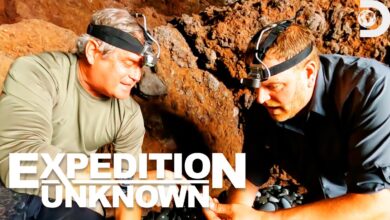
Once a hypothesis is formed and a location identified, the real work begins. Field exploration is where theory meets reality. This stage involves careful observation, documentation, and sometimes excavation.
Contrary to the fast-paced nature of television, real exploration often requires patience. Hours—or even days—can pass without significant findings. The show condenses this process, but it still captures the essence of systematic investigation.
When potential evidence is found, it is examined in context. An artifact’s location, condition, and surrounding environment all contribute to its interpretation. This attention to detail is crucial, as isolated discoveries can be misleading without proper analysis.
Importantly, the show does not always reach definitive conclusions. In some cases, evidence remains inconclusive, and the mystery persists. This willingness to embrace uncertainty adds to the authenticity of the series.
Balancing Entertainment and Accuracy
A key challenge for Expedition Unknown is maintaining scientific integrity while engaging a broad audience. Television demands pacing, drama, and narrative structure, but real-world investigation is often slow and methodical.
The show navigates this balance by focusing on storytelling without abandoning its commitment to evidence. Gates serves as both host and participant, guiding viewers through the process while acknowledging the limitations of each investigation.
There are moments of suspense and humor, but they are grounded in genuine exploration. This approach allows the series to remain accessible without oversimplifying complex topics.
The Role of Skepticism
Another important aspect of the show’s methodology is skepticism. Not every legend proves to be true, and not every clue leads to a breakthrough. Gates often questions assumptions, challenges sources, and considers alternative explanations.
This critical mindset is essential in distinguishing credible findings from coincidence or misinterpretation. It also reinforces the idea that exploration is not about proving a story right, but about discovering what is actually true.
By incorporating skepticism into its narrative, Expedition Unknown encourages viewers to think critically about the mysteries it प्रस्तुत करता है.
Conclusion: A Modern Approach to Ancient Questions
Expedition Unknown succeeds not just because of its adventurous spirit, but because of its thoughtful methodology. By combining historical research, expert collaboration, modern technology, and field investigation, the show transforms mysteries into structured inquiries.
It demonstrates that exploration is as much about asking the right questions as it is about finding answers. And while not every mystery is solved, the process itself reveals new insights into history, culture, and the natural world.
In an age where information is abundant but certainty is rare, Expedition Unknown offers a compelling model for how to navigate the unknown—with curiosity, discipline, and a willingness to embrace both discovery and doubt.
DL