Josh Gates Hunts for the Legendary Tasmanian Tiger: Still Alive or Just a Fox Ghost? Expedition Unknown S3 E12 (or S3 E9 in some listings)
Josh Gates Hunts for the Legendary Tasmanian Tiger: Still Alive or Just a Fox Ghost? Expedition Unknown S3 E12 (or S3 E9 in some listings)

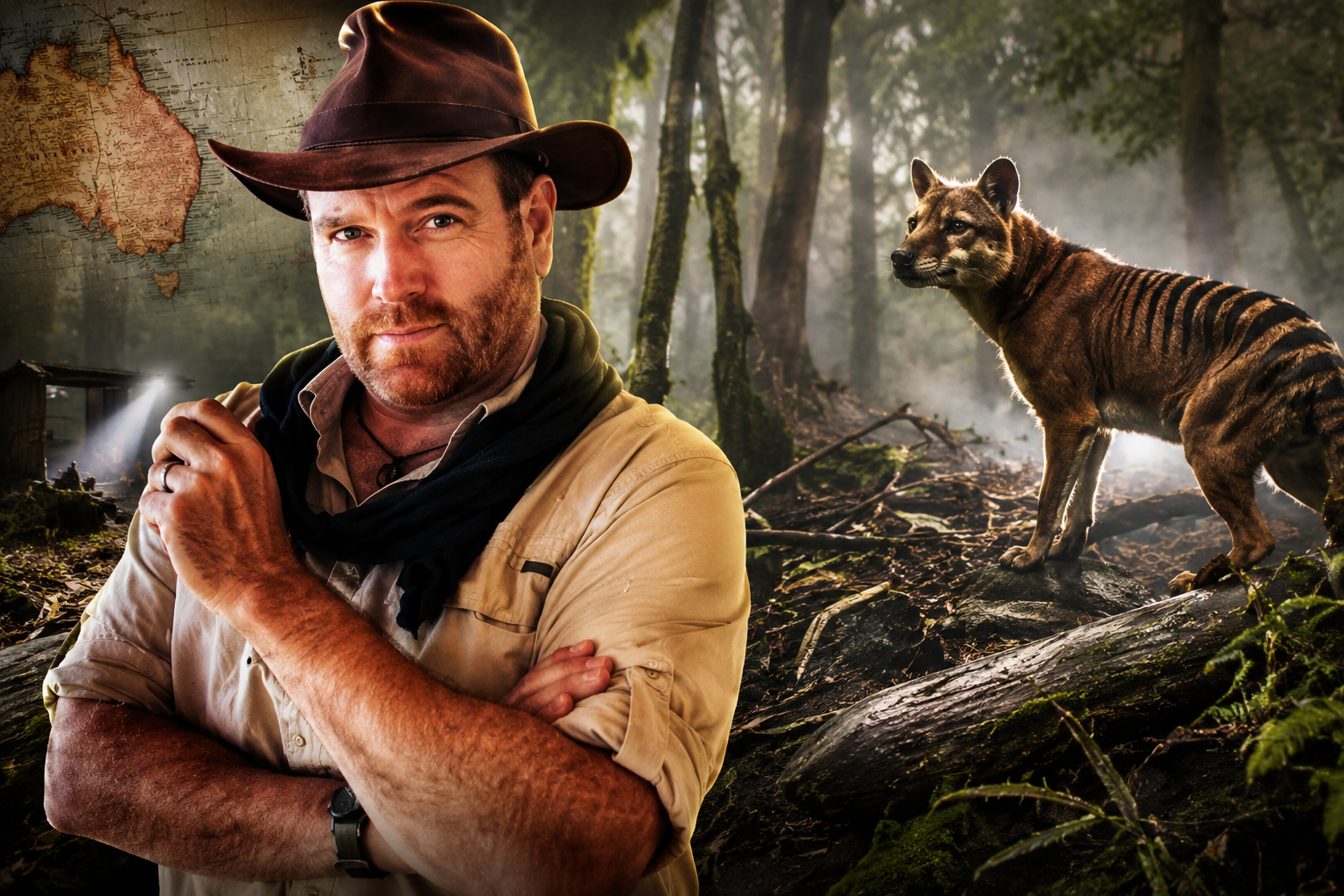
In the annals of cryptozoology and wildlife mysteries, few creatures capture the imagination quite like the Tasmanian Tiger, also known as the thylacine (Thylacinus cynocephalus). Officially declared extinct in 1936 with the death of the last known individual, “Benjamin,” at Hobart’s Beaumaris Zoo, this unique marsupial predator has refused to fade quietly into history. Its distinctive striped back, wolf-like head, and kangaroo-like gait have fueled decades of sightings, debates, and expeditions. In Expedition Unknown Season 3, Episode 12 (often listed as Episode 9 in various platforms), host Josh Gates dives headfirst into this enigma in “Tracking Tasmania’s Tiger,” blending adventure, skepticism, and cutting-edge science in a quest that leaves viewers wondering: could this iconic animal still roam the wilds of Tasmania and beyond?
Josh Gates, the charismatic explorer and archaeologist known for his blend of humor, curiosity, and rigorous investigation, approaches the thylacine with the perfect mix of open-mindedness and scientific grounding. The episode opens in Hobart, Tasmania, where Gates visits the ruins of Beaumaris Zoo. Here, in a poignant moment, he stands at the site where Benjamin paced his final days. The thylacine’s extinction was not a natural inevitability but a human tragedy. Bounty hunters, habitat loss, disease, and competition from introduced species like dingoes (on the mainland) and dogs drove the population to collapse. By the early 20th century, the animal was already rare. Yet, the story doesn’t end in 1936.
Gates meets wildlife expert Greg Irons at Bonorong Wildlife Sanctuary, getting up close with other Tasmanian natives like wombats and Tasmanian devils. This segment grounds the episode in real ecology, highlighting the thylacine’s role as a top predator in its ecosystem—a marsupial that filled a niche similar to wolves or big cats elsewhere. The thylacine’s extinction left a void, but persistent reports suggest it might never have fully vanished.
The real hunt begins near Launceston, where rancher Andrew Orchard shares compelling eyewitness testimony. Orchard claims multiple sightings on his property and presents photographs that appear to show the elusive stripes. Together, Gates and Orchard trek into the bush to a suspected thylacine den. They collect scat samples for potential DNA analysis—a moment that underscores the episode’s commitment to evidence over mere folklore. The rugged terrain, dense vegetation, and remote “Tiger Country” vividly illustrate why the animal could evade detection for decades.

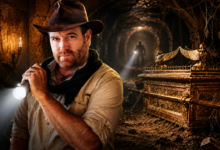


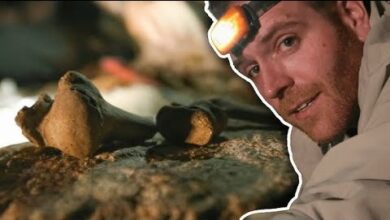
Next, Gates connects with the Thylacine Research Unit, including Chris Coupland, Bill Flowers, and Warren Darrach. These dedicated enthusiasts deploy innovative techniques: playing recordings of thylacine vocalizations (a distinctive bark or yap) and using parabolic microphones to listen for responses in the wild. The team discovers animal bones and explores a cave system where Gates himself finds what look like suspicious prints along a riverbank. These moments build genuine tension—Gates is no armchair adventurer; he’s crawling through caves and bushwhacking through wilderness, embodying the spirit of exploration.
The investigation expands to mainland Australia, specifically around Melbourne. Researcher Michael Moss introduces a fascinating theory: that thylacines may have been secretly re-released in protected areas in the early 20th century to preserve the species, with the program kept quiet due to the animal’s reputation as a livestock threat. Moss shares recent video footage, including one captured while Gates is visiting, showing an animal that strikingly resembles a thylacine darting behind a log. They review trail camera data from remote forests using rugged TOMCAR vehicles, adding a layer of modern technology to the search.
At the Melbourne Museum, evolutionary biologist Dr. Andrew Pask provides a scientific counterpoint and ray of hope. Pask’s team had successfully sequenced the entire thylacine genome, a landmark achievement that opens doors to de-extinction efforts (later pursued by projects like those at Colossal Biosciences). While not confirming current survival, the genetic work proves the animal’s biology is well-understood and potentially recoverable. This segment elevates the episode from pure cryptozoology to serious conservation science.
Throughout the episode, Gates balances enthusiasm with realism. He acknowledges that many “sightings” could be misidentifications—feral dogs, foxes with unusual markings, or even quolls. The “fox ghost” angle in the title nods to this skepticism: stripes can be illusory in low light, and Tasmania’s remote landscapes play tricks on the eyes and cameras. Yet, the sheer volume of reports—over 1,200 compiled in some studies, including credible ones from trained observers—keeps the possibility alive. Some analyses suggest the species may have persisted into the 1980s or even later in isolated pockets.
The Broader Context of the Thylacine Mystery
The thylacine’s story is deeply tied to colonial history. European settlers in Tasmania viewed it as a sheep-killer, offering bounties that resulted in thousands of kills. The last confirmed wild thylacine was shot in 1930, and Benjamin’s death in 1936 sealed the official record. But Aboriginal knowledge and early European accounts describe a widespread, adaptable predator. On the mainland, it vanished thousands of years earlier, likely due to dingoes and human pressures.
Modern interest surges with each new claim. Trail cams, drone footage, and DNA sampling have raised hopes, though definitive proof remains elusive. De-extinction conversations add urgency: if the genome exists, could cloning or gene editing bring it back? Gates touches on this future-facing angle, reminding viewers that extinction isn’t always permanent in the age of biotechnology.
Expedition Unknown excels here because Gates doesn’t claim victory or debunk the legend outright. He returns with footprints, scat, videos, and stories that challenge assumptions without providing a smoking gun. The episode’s 7.9 IMDb rating reflects its engaging storytelling and respect for both science and wonder.
Why the Tasmanian Tiger Endures
The thylacine represents more than a lost animal—it symbolizes humanity’s impact on biodiversity and our enduring fascination with the unknown. In an era of habitat destruction and climate change, its possible survival offers a narrative of resilience. Gates’ journey through Tasmania’s wilds, from abandoned zoos to misty forests, captures this duality: loss and hope intertwined.
Viewers come away informed, entertained, and perhaps a bit more willing to question official narratives. Is the Tasmanian Tiger still out there, evading cameras in remote valleys? Or are the sightings echoes of a ghost from the past? Josh Gates doesn’t definitively answer, but he equips us with the tools of curiosity and evidence to keep searching.
As de-extinction science advances and technology improves monitoring of remote areas, the thylacine’s fate may yet be rewritten. Until then, Expedition Unknown’s “Tracking Tasmania’s Tiger” stands as a compelling chapter in the ongoing saga—one that invites us all to wonder what else might still lurk in the world’s wild places.