Treasure Hunting Alaric’s Lost Fortune | Expedition Unknown S3 E15
Treasure Hunting Alaric's Lost Fortune | Expedition Unknown S3 E15

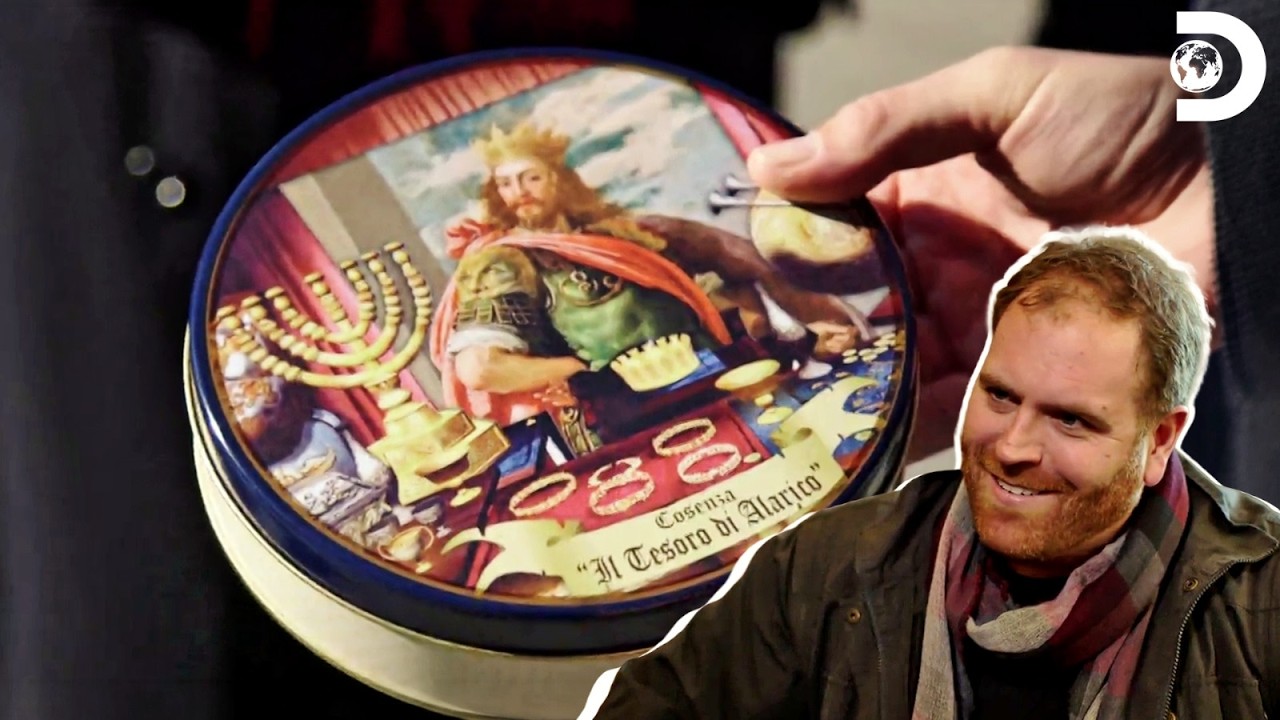
In the annals of history, few treasures captivate the imagination quite like the lost fortune of Alaric I, King of the Visigoths. In 410 AD, this barbarian leader achieved what no foreign army had done in nearly 800 years: he sacked the Eternal City of Rome. His warriors plundered centuries of accumulated imperial wealth—gold, silver, jewels, statues, and sacred artifacts from across the Roman Empire, possibly even including treasures looted from the Second Temple in Jerusalem centuries earlier. Yet, shortly after this triumph, Alaric died in southern Italy, and legend holds that his immense hoard was buried with him in a secret tomb, vanishing from history.
This epic tale of conquest, death, and hidden riches forms the heart of Expedition Unknown Season 3, Episode 15 (often referenced in some listings or promotions as tied to treasure-hunting themes around S3 E15, though formally “Italy’s Barbarian Booty”). Host Josh Gates, the intrepid adventurer and archaeologist, embarks on a thrilling quest through modern Italy to unravel the mystery. Blending historical detective work, cutting-edge technology, and on-the-ground exploration, the episode exemplifies why treasure hunting remains one of humanity’s most enduring pursuits.
The Historical Backdrop: Alaric’s Rise and the Sack of Rome
To understand the stakes, one must revisit the turbulent final days of the Western Roman Empire. Alaric, born around 370 AD into a noble Visigothic family, rose through the ranks of the Roman military before turning against it. As a foederatus (allied barbarian leader), he served the empire but grew disillusioned by broken promises of land and status for his people. By the early 5th century, with Rome weakened by internal strife, economic decline, and repeated invasions, Alaric saw opportunity.
In 410 AD, after years of maneuvering and sieges, Alaric’s Visigothic forces breached Rome’s defenses. For three days, the city was systematically looted. Contemporary accounts describe wagons groaning under the weight of gold and silver. The Visigoths took movable wealth: imperial regalia, precious metals, artworks, and religious artifacts. Some legends even link the hoard to the Menorah and other Temple treasures brought to Rome after the destruction of Jerusalem in 70 AD by Titus—items of immense historical and symbolic value.
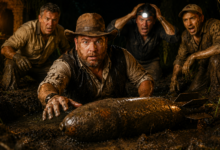
Alaric’s goal was reportedly to establish a new kingdom, perhaps in North Africa. But fate intervened. Marching south toward Calabria, he fell ill—possibly malaria or another fever—and died near Cosenza. According to the 6th-century historian Jordanes in his Getica, Alaric’s followers honored him with an extraordinary burial to protect both his body and the treasure from desecration or theft.
The Visigoths diverted the waters of the Busento River (a tributary of the Crati), dug a grave in the riverbed, interred Alaric with his wealth and possibly his horse, and then released the river to flow over the site. To ensure secrecy, they allegedly killed the slaves who performed the labor. The river’s course was restored, erasing all traces. For over 1,600 years, Alaric’s tomb—and its priceless contents—has remained one of archaeology’s greatest unsolved mysteries.
Josh Gates’ Expedition: From Rome to Cosenza
In the episode, Gates begins his journey in Rome, immersing himself in the historical context. He visits archives and consults experts like journalist and historian Francesco Sisci, who introduces him to Jordanes’ Getica, the primary source detailing the burial. This text pinpoints the area near Cosenza as the likely site. Gates’ signature blend of humor and enthusiasm shines as he navigates Rome’s chaotic traffic—likening it to “the Colosseum on wheels”—before heading south.
Arriving in Cosenza, a charming Calabrian city with deep historical roots, Gates encounters local passion for the legend. He is famously pulled over for speeding but earns a police escort, a lighthearted moment that highlights Italian hospitality. He meets Mayor Mario Occhiuto, a driving force behind modern efforts to locate the tomb. Occhiuto, along with interpreter Geppino de Rose, geologist Giuseppe “Joseph” Rota, and researcher André Xerri, has spearheaded initiatives to bring scientific rigor to the search.
The team takes Gates to a promising site outside town. Using LiDAR (Light Detection and Ranging) technology, they had previously identified anomalies in the terrain suggesting past river activity. On-site, they employ electron tomography to detect subsurface features. The excitement builds as they bore into the ground for core samples, revealing soil consistent with an ancient riverbed and even traces of old copper—tantalizing hints of human activity from the right era.
Further exploration leads the group to cliffs and caves along the river, potential locations tied to the funeral rites. They climb rugged terrain, search riverbanks, and recover artifacts like ceramic shards and metal points. While nothing definitively proves the tomb’s location, the finds fuel speculation. Gates also participates in local cultural traditions, including a falconry ceremony at a castle, underscoring the region’s rich heritage.
The Challenges and Technologies of Modern Treasure Hunting
Alaric’s treasure hunt faces formidable obstacles. The river has shifted over millennia, floods have altered the landscape, and urban development in Cosenza complicates digs. Ethical and legal hurdles abound: any discovery would involve Italian cultural heritage authorities, and the site could hold immense archaeological value beyond mere gold.
Gates’ episode highlights how technology transforms treasure hunting. LiDAR maps terrain without excavation, ground-penetrating radar and tomography peer beneath the surface, and core sampling provides non-destructive insights. These tools echo broader trends in the field, from satellite imagery in desert searches to underwater robotics for shipwrecks. Yet, as the episode shows, tech must pair with historical research and local knowledge.
The potential payoff is staggering. Estimates of the treasure’s modern value run into billions, but its true worth lies in historical significance—offering insights into late antiquity, the transition from Roman to medieval Europe, and possibly lost religious artifacts.
Why This Legend Endures
Alaric’s story resonates because it embodies the romance of lost civilizations and buried riches. Unlike purely mythical treasures, it is grounded in verifiable history: the sack of Rome is well-documented. Similar legends, like those of King John’s lost jewels or Spanish galleon gold, continue to inspire expeditions worldwide.
In Cosenza, the quest has local economic and cultural implications. Mayor Occhiuto’s efforts aim not just to find gold but to elevate the city’s profile as a hub of historical tourism. Past searches, including rumored Nazi interest under Heinrich Himmler, add intrigue, though most were fruitless.
Gates concludes the episode with poetic reflection on Italy’s layered history. He notes that while the treasure may remain hidden, the journey itself uncovers “tiny pieces of that history” from books, earth, and water. Cosenza, he suggests, could itself be one of Italy’s “hidden gems.”
The Ongoing Hunt and Broader Implications
As of the episode’s airing (May 31, 2017) and subsequent years, Alaric’s tomb has not been found. Searches continue, blending amateur enthusiasm with professional archaeology. The legend persists in books like The Lost Gold of Rome and local folklore, drawing treasure hunters and historians alike.
Expedition Unknown succeeds by humanizing these quests. Gates doesn’t always “solve” the mystery—many episodes end with more questions—but he ignites curiosity. Treasure hunting, in this context, is less about instant riches and more about connecting with the past, pushing technological boundaries, and embracing adventure.
For viewers and aspiring explorers, the episode serves as inspiration. Whether using metal detectors in fields or diving ancient rivers, the hunt for Alaric’s fortune reminds us that history’s greatest secrets may lie just beneath our feet—or under the flow of an Italian river. In a world of digital distractions, such stories reaffirm the thrill of discovery and the enduring allure of what remains unknown.