Marine Le Pen’s Scathing Attack on Anne Hidalgo: Paris as a Failed Multicultural Experiment
Marine Le Pen's Scathing Attack on Anne Hidalgo: Paris as a Failed Multicultural Experiment

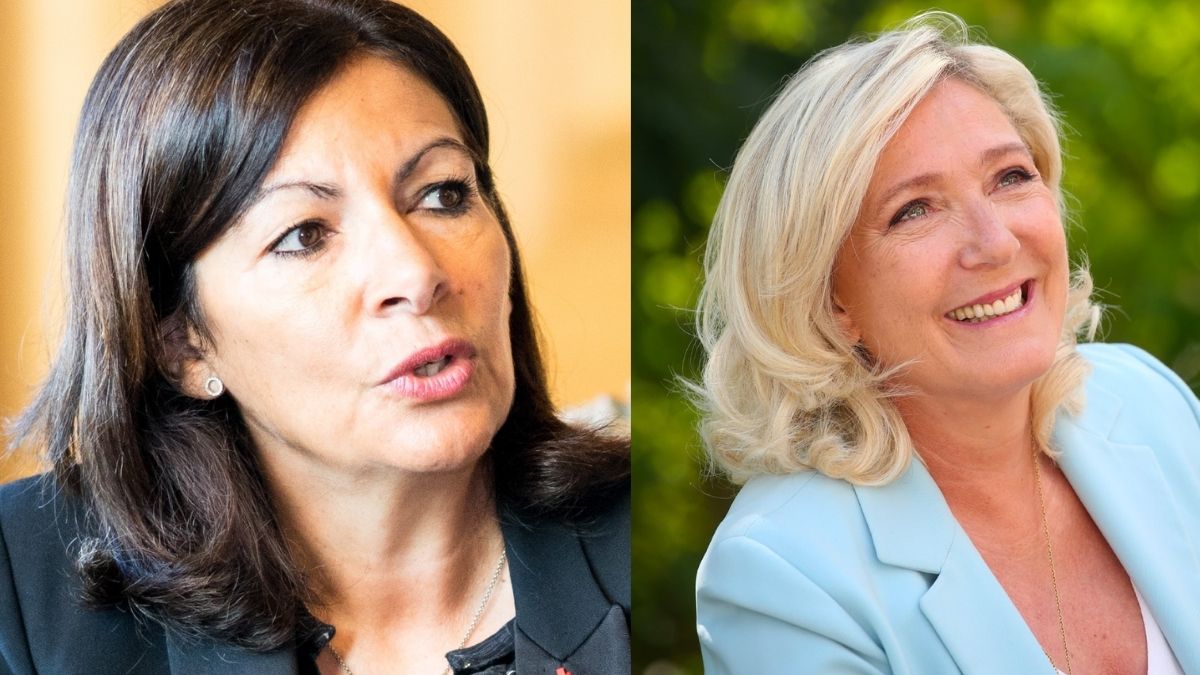
In the heated arena of French politics, Marine Le Pen once again sharpened her populist blade, this time directing it squarely at Anne Hidalgo, the long-serving Socialist Mayor of Paris. With characteristic bluntness, Le Pen declared: “Mrs. Hidalgo has turned Paris into a migrant garbage dump, where French women no longer dare to walk alone in the evening. She cares about building bike lanes and rainbows, while I care about security and the future of our children. Paris is not a multicultural experiment, Paris must be the capital of France!”
This fiery statement encapsulates Le Pen’s core message: a defense of French national identity against what she sees as decades of unchecked immigration, progressive ideological experiments, and the neglect of ordinary citizens’ safety. As the leader of the National Rally (Rassemblement National – RN), Le Pen has positioned herself as the champion of a France that prioritizes its own people, culture, and security over globalist ideals. Her critique of Hidalgo resonates strongly with many voters frustrated by rising crime, cultural shifts, and the transformation of the City of Light into what critics call a symbol of failed integration.
Anne Hidalgo’s Paris: Progressive Vision or Urban Decline?
Anne Hidalgo, mayor since 2014, has become a symbol of left-wing urban governance in Europe. Under her leadership, Paris has aggressively pursued environmental and social progressive policies: extensive bike lanes, car-free zones, massive investment in green infrastructure, and strong support for diversity initiatives, including visible LGBTQ+ symbolism (the “rainbows” Le Pen references). Hidalgo has also championed the reception of migrants, aligning with humanitarian principles and positioning Paris as an open, cosmopolitan metropolis.
Yet, according to Le Pen and her supporters, these priorities have come at a steep cost. Paris and its suburbs (the banlieues) have faced persistent challenges with illegal immigration, overcrowded shelters, street encampments, and rising insecurity. Reports of aggressive begging, theft, drug dealing, and sexual harassment in public spaces have proliferated in recent years. Many residents, particularly women, report feeling unsafe in certain neighborhoods after dark — a sentiment Le Pen amplifies powerfully in her rhetoric.


Official crime statistics and citizen testimonies paint a complex picture. While overall crime rates fluctuate, certain categories — notably knife attacks, gang violence, and assaults on women — have drawn widespread media attention. High-profile incidents, including attacks near tourist sites like the Eiffel Tower or in the metro system, have fueled public anxiety. Le Pen argues that mass irregular migration, combined with weak integration policies and lenient policing, has turned parts of Paris into “no-go zones” where French cultural norms are challenged and public order erodes.
Hidalgo’s defenders counter that many problems stem from national-level failures under successive governments, insufficient funding, and the global migration crisis. They praise her for modernizing the city, reducing car dependency, and promoting social inclusion. However, Le Pen dismisses this as ideological blindness: “She cares about bike lanes and rainbows,” while everyday Parisians worry about basic safety and the future for their families.
Immigration, Security, and the “Multicultural Experiment”
At the heart of Le Pen’s critique lies the immigration issue. France has absorbed large numbers of migrants and asylum seekers over the past decade. Paris, as the capital and a major entry point, has borne a disproportionate share. Tent encampments along the Seine, overcrowded emergency housing, and tensions in working-class districts have become recurring images in French media.
Le Pen has long warned that rapid demographic change without robust assimilation policies threatens social cohesion. She points to parallel societies, the rise of Islamist influence in some suburbs, and cultural clashes over issues like women’s rights, secularism (laïcité), and public behavior. Her slogan — “Paris must be the capital of France” — is a direct rejection of the idea of Paris as a borderless, post-national global city. Instead, she insists it should embody French sovereignty, history, and identity first.
This message taps into broader national discontent. Polls consistently show immigration and security as top concerns for French voters. The National Rally has capitalized on this, achieving strong results in recent elections and positioning itself as a governing force ahead of 2027. Jordan Bardella, Le Pen’s prominent ally, frequently echoes these themes, broadening the party’s appeal beyond its traditional base.
Critics accuse Le Pen of fearmongering and xenophobia. They argue that immigration brings economic and cultural benefits, and that problems in Paris reflect systemic inequalities rather than migration itself. Hidalgo and her allies emphasize solidarity, anti-racism, and the rich diversity of modern France. Yet Le Pen’s framing — contrasting concrete security failures with symbolic progressive gestures — strikes a chord with voters who feel their concerns are dismissed as intolerant.
Le Pen’s Alternative: National Priority and Strong Leadership
Le Pen’s attack on Hidalgo is not merely personal; it forms part of her larger vision for France. The National Rally advocates for strict border controls, an end to mass irregular immigration, “national preference” in housing and welfare, and a firm restoration of law and order. On cultural issues, Le Pen champions the defense of French secularism and women’s rights against what she calls imported misogyny and religious extremism.
In contrast to Hidalgo’s green, inclusive urbanism, Le Pen promises a Paris reclaimed for its residents: safer streets, controlled migration, and policies that put French families first. She argues that true leadership requires courage to address uncomfortable realities rather than virtue-signaling through bike paths and rainbow flags while ignoring women’s fear of walking at night.
This rhetoric has proven potent. The Yellow Vests movement, suburban riots, and repeated terror incidents have eroded trust in establishment solutions. Macron’s centrist governments attempted reforms and tougher migration measures at times, but many voters perceive them as too little, too late. Hidalgo’s tenure, extended through multiple terms, has become a convenient target for Le Pen to illustrate the failures of the left on urban governance.
Challenges and the Road to 2027
Le Pen faces her own challenges. Mainstream parties and much of the media portray her and the RN as extremist, warning that her policies would divide society and damage France’s international image. Hidalgo, despite criticism, retains support among progressive voters and has positioned herself as a resilient defender of urban modernity.
Nevertheless, the political winds appear favorable for Le Pen’s narrative. With Emmanuel Macron’s influence waning and the traditional right fragmented, the 2027 presidential election looms as a pivotal moment. Immigration, security, and national identity are set to dominate the campaign. Le Pen’s ability to present herself as the defender of everyday French people against elite experiments will be central to her strategy.
Conclusion: Paris – Capital of France or Global Laboratory?
Marine Le Pen’s blistering critique of Anne Hidalgo goes beyond one mayor’s record. It raises fundamental questions about the soul of France’s capital and the nation itself: Should Paris prioritize French citizens’ security, culture, and future, or serve as a testing ground for multicultural and progressive ideals? Le Pen’s answer is unequivocal — Paris must belong to France and the French.
Her words capture a deep sense of loss and urgency felt by many: the fear that beloved cities are changing beyond recognition, that women’s safety is compromised, and that political leaders are more focused on ideological projects than on protecting their people. Whether voters will embrace Le Pen’s vision of national renewal or prefer Hidalgo-style progressivism remains to be seen. But one thing is clear: the debate over what Paris — and France — should become will define the country’s political future for years to come.
As the campaign intensifies, Le Pen’s message rings loud: enough with the experiments. It is time to put France first.