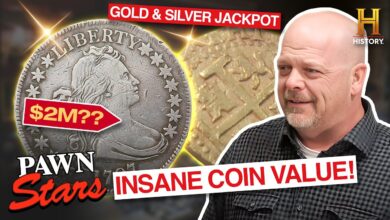
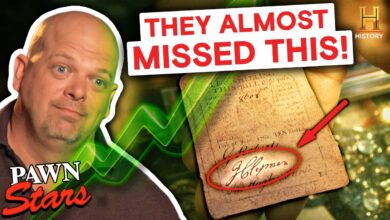
In the unpredictable world of collectibles, nothing creates more tension—or fascination—than the moment an expert admits: “This is hard to price.” On Pawn Stars, such moments often lead to the most brutal appraisals. These aren’t just about numbers—they’re about uncertainty, rarity, and the emotional weight tied to objects that may be truly one of a kind.
Unlike mass-produced antiques or widely traded memorabilia, unique items exist in a category of their own. Their value isn’t dictated by a standard market but by a complex mix of history, provenance, and sometimes pure speculation. And when sellers walk into the shop expecting a fortune, the reality can be surprisingly harsh.
When “One of a Kind” Doesn’t Mean Priceless


One of the biggest misconceptions sellers bring into the shop is the belief that uniqueness automatically equals high value. While rarity is important, it doesn’t guarantee demand. Rick Harrison often reminds sellers that “you need two people who want it” to create real market value.
For example, a handmade artifact with no clear origin or documentation might indeed be one of a kind—but without proof of authenticity or historical significance, it becomes nearly impossible to price. In such cases, experts may deliver a brutally honest assessment: the item is interesting, but not necessarily valuable.
This is where expectations collide with reality. Sellers who anticipate thousands of dollars may walk away with only a few hundred—or nothing at all.




The Role of Experts: History vs. Hype

On Pawn Stars, unique items almost always require outside expertise. Specialists are called in to authenticate signatures, analyze materials, and place the object within a historical context. But even experts can struggle when faced with something truly unusual.
An artifact with unclear origins presents a major challenge. Without comparable sales or verified history, experts must rely on educated estimates. This uncertainty often leads to conservative valuations—much to the disappointment of sellers.
In some cases, the verdict is even harsher: the item may be deemed a reproduction or altered piece, drastically reducing its worth. These moments, while difficult to watch, highlight the importance of verification in the collectibles market.
Emotional Value vs. Market Value
Perhaps the most striking aspect of these brutal appraisals is the emotional disconnect between what an item means to its owner and what it’s actually worth. Many one-of-a-kind items are family heirlooms, passed down through generations and rich with personal stories.
However, sentimental value doesn’t translate into cash. A handwritten letter from an unknown individual may hold deep personal significance, but without a famous name attached, its market value remains limited.
Rick and his team often navigate these situations carefully, balancing honesty with empathy. Still, the outcome can be tough: a cherished object may not command the price its owner believes it deserves.
The Rarest Wins: When Unique באמת Pays Off


Of course, not all brutal appraisals end in disappointment. Occasionally, a truly exceptional item enters the shop—something with undeniable historical importance and verified authenticity.
These are the moments collectors dream of: a signed document from a major historical figure, a prototype of a famous invention, or an artifact tied to a pivotal event. When such items appear, their uniqueness becomes a powerful asset rather than a liability.
In these rare cases, the phrase “hard to price” can actually work in the seller’s favor. With no direct comparisons, the ceiling for value can rise dramatically—especially if multiple buyers are interested.
The Business Reality Behind Every Offer

Even when an item is valuable, the final offer on Pawn Stars reflects more than just its estimated worth. Rick Harrison must consider resale potential, storage time, and the risk of finding the right buyer.
For one-of-a-kind items, that risk is significantly higher. Without a clear market, the shop may hold onto the item for months—or even years—before selling it. As a result, offers are often lower than the appraised value, leading to tense negotiations.
This practical approach is a key reason why appraisals can feel “brutal.” It’s not just about what something could be worth—it’s about what it’s realistically worth right now in a specific market context.
Lessons from the Harshest Appraisals
What can viewers and collectors learn from these unforgettable moments?
- Documentation is everything: Provenance can make or break value.
- Rarity needs demand: Unique doesn’t always mean desirable.
- Condition matters: Even one-of-a-kind items lose value if damaged.
- Be realistic: السوق (market) determines price, not personal belief.
These lessons apply across all types of collectibles, from historical artifacts to modern memorabilia.
Conclusion: The Truth Behind “Hard to Price”
In the world of Pawn Stars, the phrase “hard to price something like this” is both intriguing and revealing. It signals a moment where history, emotion, and economics collide—and where expectations are often tested.
Brutal appraisals aren’t about diminishing the importance of an item; they’re about grounding it in reality. For every hidden treasure worth a fortune, there are countless unique objects that simply don’t have a market.
And that’s what makes the show so compelling. It reminds us that value is not just about rarity or age—it’s about context, demand, and the stories we choose to believe.
In the end, whether a deal is made or not, each appraisal tells a story. Sometimes it’s a story of unexpected riches. Other times, it’s a lesson in humility. But it’s always a glimpse into the fascinating—and often unforgiving—world of collectibles.
 DL
DL