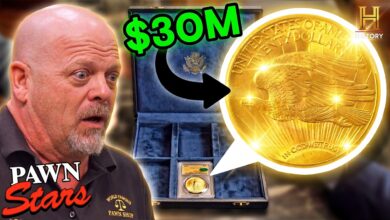
If you’ve ever watched Pawn Stars, you’ve probably had the same reaction as countless viewers: “That offer is way too low!” The show thrives on negotiation drama, with Rick Harrison and his team making deals that often leave sellers shocked—or frustrated.
But are these offers actually unfair? Or is there more going on behind the scenes?
The Reality of Pawn Shop Economics
At its core, a pawn shop is a business—not a museum or a charity. While sellers often come in expecting top dollar for their items, Rick Harrison has to think like a reseller.
Here’s the key difference:
- Seller mindset: “This item is worth $5,000.”
- Buyer mindset: “Can I sell this for $5,000—and still make a profit?”
Rick frequently explains that he needs room for:




- Profit margins
- Restoration or repair costs
- Time spent finding the right buyer
- Risk (what if the item doesn’t sell?)
So when he offers $2,000 for something a seller believes is worth $5,000, it’s not necessarily a “lowball”—it’s a calculated business move.
Why Offers Feel “Too Low”


There’s a psychological element at play. Many items brought into the shop carry personal or emotional value—family heirlooms, inherited collectibles, or rare finds discovered after years.
This creates a gap between:
- Emotional value (what it means to the owner)
- Market value (what buyers are willing to pay)
When Rick makes an offer based strictly on market realities, it can feel dismissive—even if it’s accurate.
The Role of Experts


One of the defining features of Pawn Stars is the use of specialists. When an item could be valuable, Rick often brings in experts to assess authenticity and market worth.
These experts help answer critical questions:
- Is the item genuine?
- How rare is it?
- What have similar items sold for recently?
Their evaluations often surprise both the seller and the audience. Sometimes the item is worth far more than expected—but just as often, it’s worth less.
And that expert valuation becomes the foundation for Rick’s offer.
The Hidden Costs Behind Every Deal


What viewers don’t always consider are the hidden costs after a deal is made. Buying an item is just the beginning.
Rick may need to:
- Restore or clean the item
- Store it for months (or years)
- Market it to collectors
- Negotiate again with future buyers
Each of these steps reduces the final profit margin. That’s why initial offers tend to be conservative.
When Sellers Push Back
One of the most entertaining aspects of Pawn Stars is watching sellers negotiate. Some accept the first offer, while others counter aggressively—or walk away entirely.
Common negotiation tactics include:
- Bringing documentation to prove value
- Highlighting rarity or unique features
- Setting a firm minimum price
- Being willing to leave without a deal
Interestingly, the sellers who succeed often understand the same principle Rick does: a deal has to work for both sides.
Are the Offers Fair?


The short answer? Usually, yes.
While offers may seem low compared to retail or auction prices, they reflect:
- Wholesale buying strategy
- Realistic resale expectations
- Business risk
It’s also important to remember that sellers are not obligated to accept any offer. Every deal is voluntary.
In many cases, what looks like a “lowball” is actually a standard industry practice.
The Entertainment Factor
Of course, Pawn Stars is still television. Editing, pacing, and dramatic reactions are designed to keep viewers engaged.
Moments where offers seem outrageously low are often highlighted because they spark conversation. They make viewers question value, fairness, and negotiation strategy.
But behind the drama lies a real-world lesson: value is not fixed—it’s negotiated.
Conclusion: More Than Just a Number


So, are the offers on Pawn Stars really too low?
Sometimes they feel that way—but when you factor in business realities, risk, and market dynamics, they often make sense.
For Rick Harrison, every offer is a balancing act between opportunity and risk. And for viewers, these negotiations offer something more valuable than any single deal: insight into how value is truly determined.
In the end, the real lesson of Pawn Stars isn’t about winning or losing a negotiation—it’s about understanding the game itself.
 DL
DL