Marine Le Pen’s Sharp Rebuke of Valérie Pécresse: The “Fake Right” Exposed
Marine Le Pen's Sharp Rebuke of Valérie Pécresse: The "Fake Right" Exposed

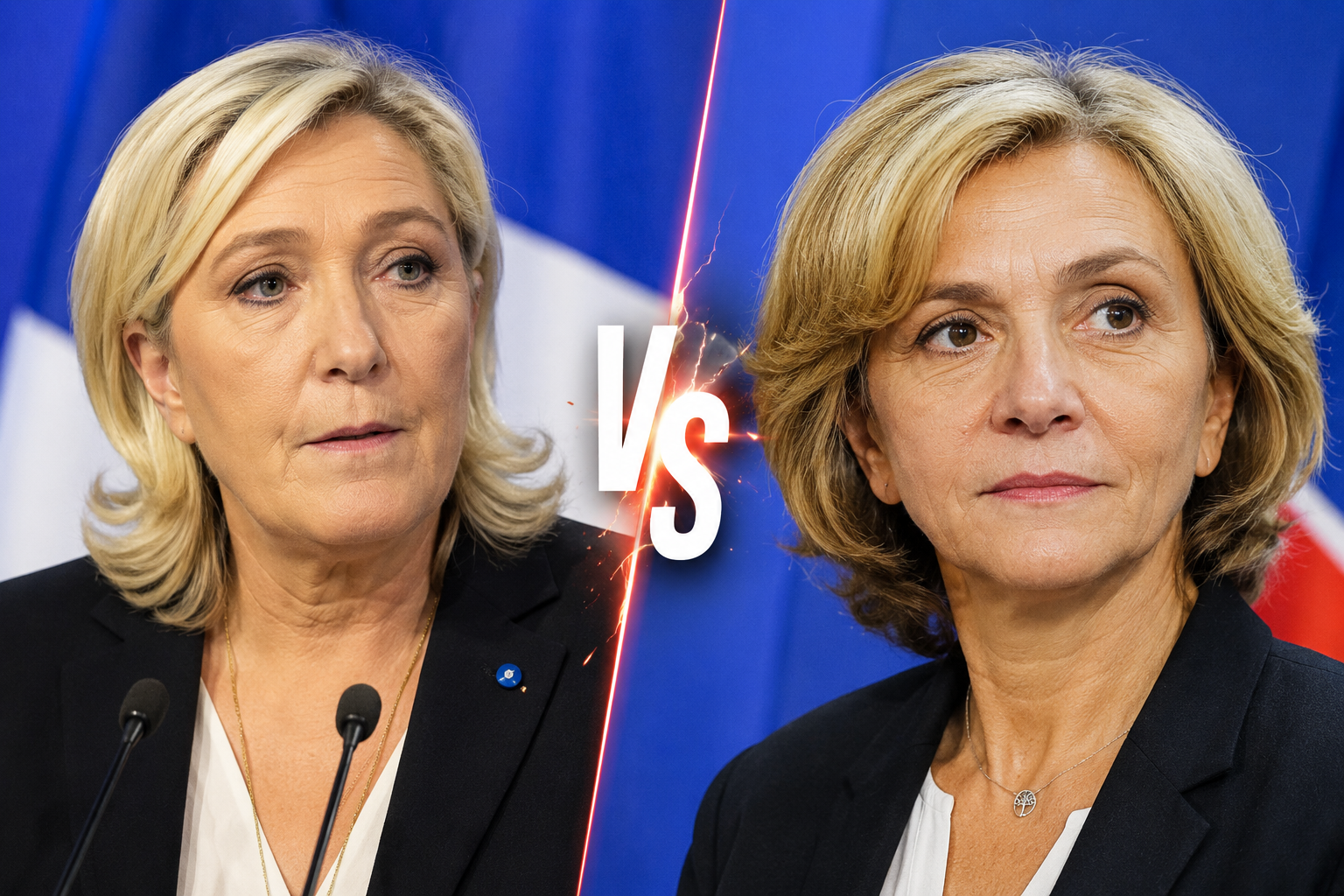
In the fierce competition to redefine the French right ahead of the 2027 presidential election, Marine Le Pen has trained her sights on Valérie Pécresse, the former Les Républicains (LR) presidential candidate and current president of the Île-de-France region. With her signature populist clarity, Le Pen stated:
“Mrs. Pécresse claims to be right-wing, but she is afraid to confront migration and Islam. She is a softer version of Macron. The French people do not need a fake ‘right wing’; they need someone who dares to speak loudly and act strongly!”
This attack forms part of Le Pen’s systematic campaign to delegitimize the traditional center-right, portraying it as ideologically weak, compromised by Macronism, and incapable of addressing the core concerns of French voters: uncontrolled immigration, Islamist separatism, and the erosion of national identity.
Valérie Pécresse: A Classic Center-Right Figure Under Pressure
Valérie Pécresse emerged as the Les Républicains candidate in the 2022 presidential election, positioning herself as a competent, reformist conservative with experience in government under Nicolas Sarkozy. As president of the wealthy Île-de-France region, she has managed budgets, transport, and regional development. Her rhetoric often includes calls for tougher security measures, fiscal responsibility, and a defense of republican values. However, critics within the right accuse her of remaining too moderate on immigration and cultural issues, favoring technocratic solutions and European integration over radical breaks with the status quo.




Le Pen’s description of Pécresse as a “softer version of Macron” highlights what many on the National Rally (Rassemblement National – RN) see as the fundamental problem with the traditional right: it talks about conservative principles but lacks the courage to implement them when faced with powerful taboos around migration and Islam.
The Central Issues: Migration and Islam
Immigration and the integration of Islam remain the most divisive topics in French politics. France continues to manage large-scale migratory flows, with persistent challenges in asylum processing, illegal crossings, and integration in the banlieues. Islamist separatism, radicalization, and related security threats — including terror attacks and the emergence of parallel societies — have heightened public anxiety.
Le Pen argues that figures like Pécresse offer only timid responses: occasional tough speeches followed by limited action, compromises with EU rules, and a reluctance to name the cultural and religious dimensions of the problem. She accuses the center-right of fearing accusations of “Islamophobia” or “racism” more than they fear the consequences for French society — rising crime in certain neighborhoods, pressures on housing and welfare, and the gradual transformation of French towns and cities.
Pécresse and her allies counter that they support stricter border controls, better integration policies, and the defense of laïcité (secularism). They criticize Le Pen’s approach as overly radical and potentially counterproductive, arguing that a broad republican front is needed to defeat both Macron’s centrism and the extremes. Yet, to Le Pen’s growing base, this sounds like the same old hesitation that has characterized the center-right for decades.
Le Pen’s Strategy: Unmasking the “Fake Right”
By labeling Pécresse part of the “fake right,” Le Pen aims to collapse the space between Macron’s centrism and the traditional LR. She presents the National Rally as the only authentic right-wing force willing to:
- Dramatically reduce immigration and restore full national border control.
- Enforce “national preference” for French citizens in jobs, housing, and social benefits.
- Confront Islamist ideology head-on, including stricter controls on foreign funding of mosques and radical imams.
- Prioritize the security and cultural continuity of the French people above all.
This message resonates strongly in la France périphérique — rural areas, small towns, and working-class suburbs where voters feel abandoned by Parisian elites. Le Pen’s party has successfully attracted former LR and even left-wing voters disillusioned by years of ineffective policies on these issues.
Recent polling trends show the RN maintaining a strong position, with Jordan Bardella often viewed as a dynamic representative of the new generation. Le Pen’s repeated attacks on center-right figures like Pécresse, Darmanin, and Philippe are designed to prevent any credible reconstitution of a moderate right that could siphon votes away from the RN in the 2027 first round.
Broader Political Context
The French right has been fragmented since Sarkozy’s era. Macron’s 2017 victory split the center-right, pulling many moderates into his orbit. The 2022 election further exposed LR’s decline, with Pécresse failing to reach the second round. Today, the party struggles to differentiate itself: too timid for Le Pen’s voters, yet too conservative for Macron’s base.
Le Pen exploits this identity crisis masterfully. She argues that the French no longer want polite, cautious conservatives who fear media backlash and judicial obstacles. They want a leader who “dares to speak loudly and act strongly” — someone willing to break taboos, challenge EU constraints if necessary, and put the interests of native French citizens first.
Critics of Le Pen, including Pécresse herself, accuse the RN of demagoguery and simplification. They warn that radical approaches risk social division, economic isolation, and damage to France’s international reputation. They advocate for pragmatic, law-based solutions within the European framework. However, persistent news stories about urban violence, church attacks, strained public services, and demographic change continue to bolster Le Pen’s narrative.
Challenges Ahead for Both Sides
Pécresse faces an uphill battle to revive the center-right. She must navigate accusations of weakness while avoiding being pulled too far toward RN positions, which would alienate her moderate supporters. For Le Pen, the challenge is to translate polling strength into governing credibility — proving that her party can move beyond opposition and deliver concrete results without the excesses her opponents fear.
As 2027 approaches, the battle for the right-wing electorate will be decisive. A unified or resurrected center-right could block Le Pen; a continued collapse would likely hand her a clear path to the second round.
Conclusion: The Demand for Authentic Leadership
Marine Le Pen’s critique of Valérie Pécresse cuts to the heart of France’s political realignment. In her view, the country has suffered too long from hesitant, half-hearted policies dressed in right-wing clothing. The French people, she insists, are exhausted by “fake right” figures who resemble Macron in substance if not in style.
Le Pen’s call is for courage: courage to confront the realities of mass migration and Islamist challenges, courage to prioritize French identity and security, and courage to break with decades of failed consensus. Whether Pécresse or other center-right leaders can mount a convincing alternative remains uncertain. What is increasingly clear is that a significant portion of the electorate is ready for a stronger, unapologetic defense of the nation.
As the campaign intensifies, this clash between cautious conservatism and bold nationalism will shape France’s trajectory. Le Pen is betting that voters will choose the leader who speaks loudly and acts decisively over those who offer only softer versions of the same old policies. The coming months will reveal whether the French people agree.