The Untold Truth of Christopher Columbus! | Expedition Unknown
The Untold Truth of Christopher Columbus! | Expedition Unknown

Introduction: Beyond the Legend
For centuries, Christopher Columbus has been immortalized as the bold navigator who “discovered” the Americas in 1492. His story is often told as one of courage, persistence, and triumph against impossible odds. However, modern historians and investigative series like Expedition Unknown reveal a far more complex—and controversial—figure behind the legend.
This article explores the untold truth of Columbus: his ambitions, the myths surrounding his voyages, and the darker consequences of his expeditions that reshaped the world forever.
The Man Behind the Myth
Born in 1451 in Genoa, Italy, Columbus was not originally destined for greatness. He worked as a merchant sailor, gradually gaining experience navigating the Mediterranean and Atlantic. What set him apart was his unwavering belief that he could reach Asia by sailing west—a theory widely debated at the time.
Contrary to popular belief, Columbus was not the only person who thought the Earth was round. Educated Europeans already knew this. The real controversy was the size of the Earth. Columbus drastically underestimated its circumference, believing Asia was much closer than it actually is. This miscalculation would define his legacy.




A Voyage Funded by Ambition
After being rejected by Portugal, Columbus turned to Spain. With persistence, he gained the support of King Ferdinand and Queen Isabella. In 1492, he set sail with three ships: the Niña, the Pinta, and the Santa María.
His goal was clear—find a faster route to Asia. But what he found instead was the Caribbean, landing on islands that were already inhabited by indigenous peoples.
Columbus believed until his death that he had reached the outskirts of Asia. He never truly understood that he had encountered an entirely new continent.
The First Encounter: A Clash of Worlds
When Columbus arrived, he encountered the Taíno people, who greeted him with curiosity and generosity. Early journal entries describe them as peaceful and open. However, these first encounters quickly shifted from exploration to exploitation.
Columbus reported the land’s potential wealth—particularly gold—and saw the native population as a resource. This marked the beginning of European colonization in the Americas, a process that would lead to devastating consequences for indigenous communities.
The Dark Reality of Colonization
While traditional narratives celebrate Columbus as a hero, modern research paints a far more troubling picture.
During his later voyages, Columbus governed parts of the Caribbean under Spanish authority. Historical records indicate that his rule was marked by brutality. Indigenous people were forced into labor systems, subjected to violence, and punished harshly for failing to meet quotas—especially for gold.
Many historians argue that Columbus played a direct role in initiating systems of oppression that would later define colonial rule across the Americas. Population decline among native peoples was catastrophic, caused by forced labor, violence, and diseases brought by Europeans.
This darker legacy is why Columbus remains a deeply controversial figure today.
Expedition Unknown: Reinvestigating the Truth
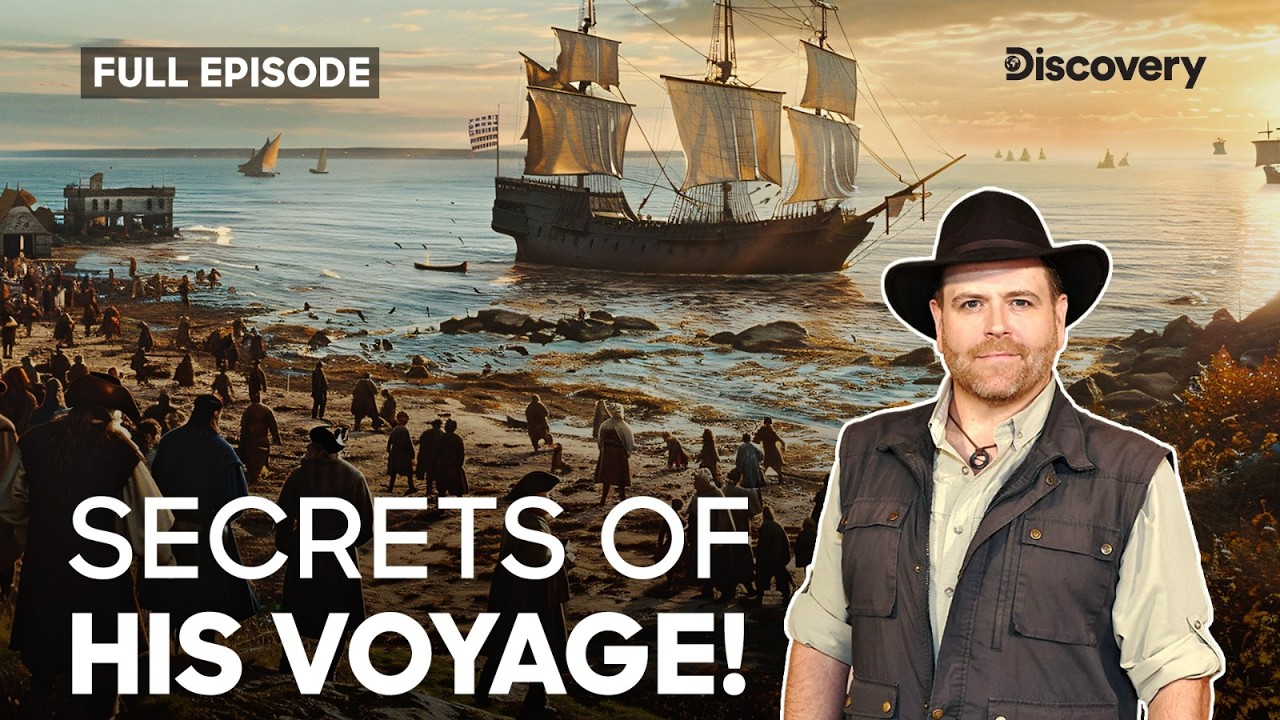
In Expedition Unknown, host Josh Gates dives into the mysteries surrounding Columbus’s journeys. The show examines not just the voyages themselves, but also the myths that have shaped public perception for generations.
Through archaeological evidence, expert interviews, and on-site exploration, the series questions long-held assumptions:
- Did Columbus truly “discover” anything?
- How accurate are historical accounts of his journeys?
- What evidence exists about his interactions with indigenous populations?
One of the key takeaways from the investigation is that history is often written by the victors. Columbus’s story was shaped by European perspectives, leaving out the voices of those who experienced his arrival firsthand.
Myths vs. Reality
Several common myths about Columbus have been debunked over time:
Myth 1: Columbus proved the Earth was round
Reality: Scholars already knew this. His journey was about distance, not shape.
Myth 2: He discovered America
Reality: Indigenous peoples had lived there for thousands of years.
Myth 3: He was universally celebrated in his time
Reality: Columbus was actually arrested and returned to Spain in chains due to complaints about his governance.
These revelations challenge the simplified version of history taught for generations.
A Legacy Reconsidered
Today, Columbus’s legacy is being reevaluated worldwide. In many places, Columbus Day has been replaced or supplemented by Indigenous Peoples’ Day, reflecting a shift toward recognizing the impact of colonization on native communities.
This shift does not erase history—it expands it. Understanding Columbus requires acknowledging both his role in connecting continents and the suffering that followed.
Why the Truth Matters
The story of Christopher Columbus is more than just a historical account—it’s a reminder of how narratives are shaped. By revisiting his story through modern research and investigative media like Expedition Unknown, we gain a fuller, more honest understanding of the past.
History is rarely simple. It is layered with perspectives, biases, and evolving interpretations. Columbus’s journey changed the world, but not always in ways that align with the heroic image many were taught.
Conclusion: A Complex Figure in a Complex World
Columbus was neither purely a hero nor solely a villain—he was a product of his time, driven by ambition, curiosity, and the desire for wealth and recognition. His voyages opened the door to global exploration, but also to colonization and conflict on an unprecedented scale.
By uncovering the untold truth, we move beyond myths and toward a deeper understanding of history—one that includes all voices, not just the ones that were traditionally heard.