Stonehenge Mysteries Finally Revealed by Cutting-Edge Technology | Expedition Unknown
Stonehenge Mysteries Finally Revealed by Cutting-Edge Technology | Expedition Unknown

🔍 A 5,000-Year-Old Puzzle Revisited
For centuries, Stonehenge has stood as one of the world’s most iconic and mysterious landmarks. Rising from the Salisbury Plain in southern England, this ring of massive standing stones has puzzled historians, archaeologists, and visitors alike.
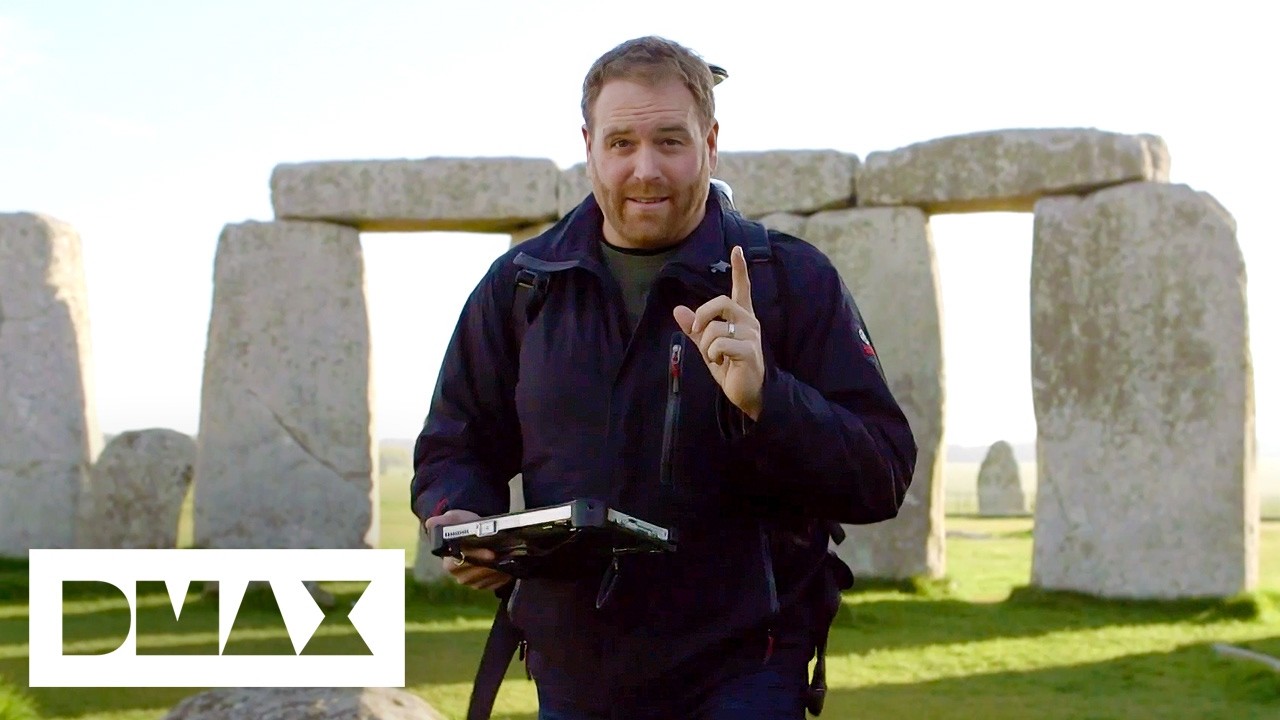
In a fascinating episode of Expedition Unknown, host Josh Gates embarks on a journey to uncover new truths about Stonehenge—armed not with shovels, but with cutting-edge technology.
🖼️ The Enigmatic Monument
Constructed between roughly 3000 BCE and 2000 BCE, Stonehenge consists of enormous sarsen stones and smaller bluestones, some weighing up to 25 tons. Transporting and erecting these stones without modern machinery remains one of the greatest engineering mysteries of the ancient world.
But how was it built? Why was it built? And what secrets still lie hidden beneath the earth?




🧪 Technology Meets Archaeology
In this episode, Expedition Unknown explores how modern science is revolutionizing our understanding of ancient sites. Instead of traditional excavation—which can be destructive—researchers now rely on non-invasive technologies such as:
-
Ground-penetrating radar (GPR)
-
LiDAR scanning (Light Detection and Ranging)
-
3D mapping and digital reconstruction
-
Geophysical surveys
These tools allow scientists to “see” beneath the surface without disturbing the site.
Josh Gates joins experts in scanning the landscape around Stonehenge, revealing features that had remained hidden for thousands of years.
🧭 A Hidden Landscape Emerges
One of the most groundbreaking discoveries highlighted in the episode is that Stonehenge is not an isolated monument—it is part of a vast, interconnected ceremonial landscape.
Using advanced imaging, researchers uncovered:
-
Buried pits and ditches forming ancient boundaries
-
Remnants of wooden structures predating the stones
-
Previously unknown burial mounds
-
Pathways that may have guided ritual processions
These findings suggest that Stonehenge was the center of a much larger ritual complex, possibly used for ceremonies, burials, and astronomical observations.
🌌 Astronomical Alignments
Stonehenge has long been associated with the movements of the sun and stars. The monument famously aligns with the sunrise during the summer solstice and the sunset during the winter solstice.
The episode explores how new data supports the idea that ancient builders had a sophisticated understanding of astronomy. By mapping the exact positioning of stones and surrounding features, researchers believe Stonehenge may have functioned as:
-
A solar calendar
-
A ceremonial gathering site tied to seasonal cycles
-
A symbolic connection between the living and the dead
Josh Gates participates in a sunrise observation, experiencing firsthand how the monument interacts with light in a powerful and almost spiritual way.
🧬 Tracing the Origins of the Stones
Another mystery tackled in the episode is the origin of the stones themselves.
While the larger sarsen stones likely came from nearby quarries, the smaller bluestones were transported from the Preseli Hills in Wales—over 150 miles away.
Using geochemical analysis and modern tracing techniques, scientists have confirmed:
-
The exact quarry sites of several stones
-
Evidence of organized transport, possibly involving sledges, rollers, and waterways
-
The likelihood of a coordinated, large-scale effort by ancient communities
This challenges earlier theories that the stones were moved randomly or by small groups.
👥 Who Built Stonehenge?
For years, speculation about Stonehenge’s builders ranged from ancient druids to lost civilizations—even extraterrestrials.
However, the evidence presented in Expedition Unknown points to Neolithic communities in Britain. DNA analysis and archaeological findings suggest:
-
The builders were part of farming societies
-
They had complex social structures
-
They were capable of organizing massive construction projects
Rather than a mysterious lost race, Stonehenge appears to be the achievement of early human ingenuity and cooperation.
⚖️ Debunking Myths
The episode also addresses some of the more sensational theories surrounding Stonehenge:
-
❌ Alien construction theories – No evidence supports extraterrestrial involvement
-
❌ Druid origins – Stonehenge predates Celtic druids by over a thousand years
-
❌ Magical healing powers of stones – While culturally significant, no scientific proof exists
By separating fact from fiction, the show reinforces the importance of evidence-based archaeology.
🎥 The Role of Exploration Shows
Programs like Expedition Unknown play a crucial role in bringing complex scientific discoveries to a wider audience.
Through the engaging storytelling of Josh Gates, viewers are able to:
-
Understand advanced technologies in simple terms
-
Appreciate the scale and significance of discoveries
-
Connect emotionally with historical mysteries
The combination of adventure and education makes these discoveries accessible and exciting.
🏛️ A New Chapter in an Ancient Story
Despite centuries of study, Stonehenge continues to reveal new secrets. Thanks to cutting-edge technology, researchers are now able to explore the site in ways that were unimaginable just a few decades ago.
What once seemed like an isolated circle of stones is now understood as part of a dynamic and complex prehistoric world.
✨ Final Thoughts
The mysteries of Stonehenge may never be fully solved—but with each technological breakthrough, we move closer to understanding the people who built it and the purpose it served.
As showcased in Expedition Unknown, the fusion of science and exploration is rewriting history—one discovery at a time.
And perhaps the greatest revelation of all is this: the true wonder of Stonehenge lies not in myth or mystery, but in the ingenuity of humanity itself.