Scientists Want To Clone A Woolly Mammoth! | Expedition Unknown S3 E5
Scientists Want To Clone A Woolly Mammoth! | Expedition Unknown S3 E5

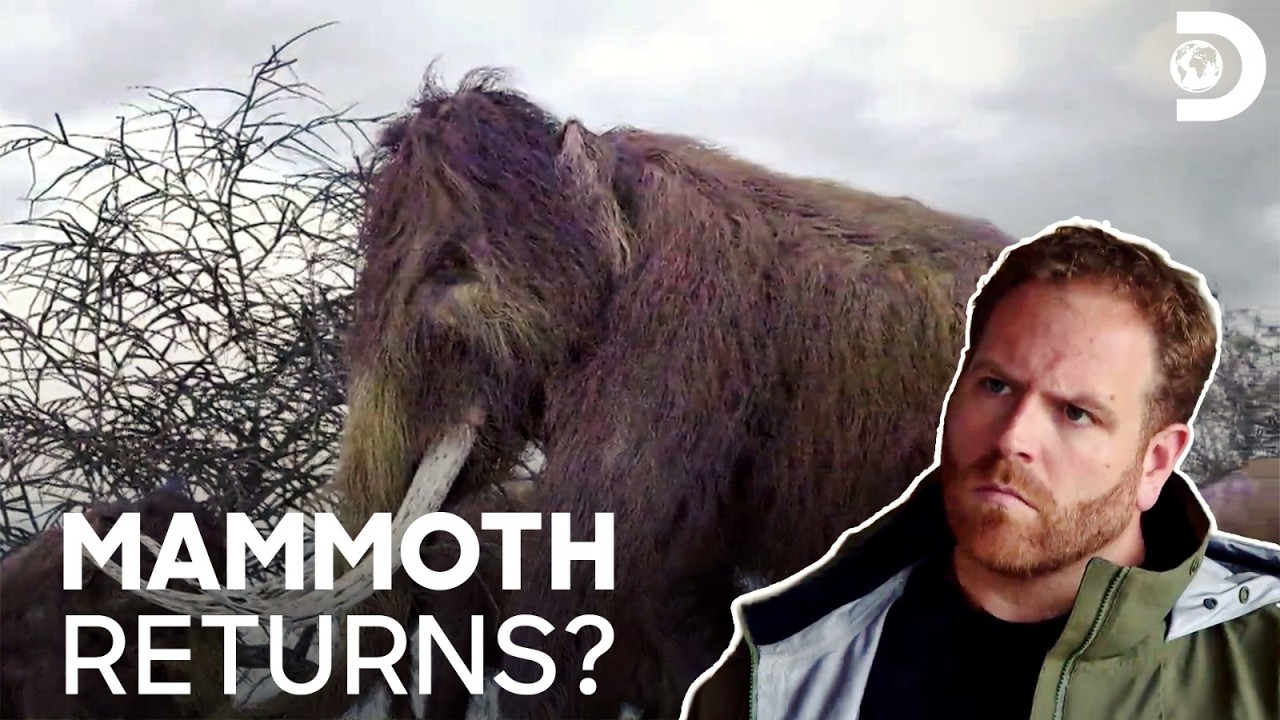
For thousands of years, the woolly mammoth has existed only in fossils, frozen remains, and the imagination of scientists. These giant Ice Age creatures once roamed across vast regions of Europe, Asia, and North America before disappearing approximately 10,000 years ago. But what if extinction wasn’t permanent? What if science could bring one of history’s most iconic animals back to life?
That extraordinary question lies at the heart of Expedition Unknown Season 3 Episode 5, Cloning the Woolly Mammoth. In this fascinating episode, explorer Josh Gates travels across three continents to investigate one of the most ambitious scientific projects ever attempted: the effort to clone a woolly mammoth and potentially reverse extinction itself.
The adventure begins with a simple but revolutionary idea. Modern genetic technology has advanced to the point where scientists can clone certain animals. If enough viable mammoth DNA could be recovered from frozen remains, researchers might someday create a living animal carrying the genetic traits of the extinct giant. While the concept sounds like something from a science-fiction movie, several scientific teams around the world have spent years investigating whether such a feat is actually possible.
To understand the science behind the project, Josh Gates first visits Canada’s Yukon region, one of the world’s richest sources of Ice Age fossils. The Yukon was once part of a vast ecosystem known as the Mammoth Steppe, where countless mammoths, bison, horses, and other prehistoric animals thrived during the last Ice Age. Today, gold miners frequently uncover ancient bones preserved in frozen soil.



In Dawson City and nearby mining operations, Gates joins paleontologists and miners searching for mammoth remains. The work is physically demanding and often unpredictable. Massive excavators tear through layers of frozen earth, revealing bones that have remained hidden for tens of thousands of years. During the investigation, the team uncovers prehistoric animal remains, including mammoth bones that could potentially contain valuable genetic material.
However, finding bones is only the beginning.
The real challenge is locating DNA that has survived thousands of years of decay. Unlike fossils made entirely of minerals, some mammoth remains discovered in Arctic regions have been preserved by permafrost. These frozen environments act like natural freezers, slowing decomposition and protecting tissues that may still contain fragments of genetic information. Scientists hope that somewhere within these ancient remains lies DNA intact enough to help reconstruct the mammoth genome.
The next stage of Gates’ journey takes him halfway around the world to South Korea, where he visits a biotechnology laboratory involved in advanced cloning research. The facility has already achieved remarkable success cloning animals, including dogs. During his visit, Gates witnesses the sophisticated processes used to culture cells and replicate genetic material. The laboratory serves as a glimpse into the future of biotechnology and demonstrates that cloning itself is no longer the impossible dream it once was.
Yet despite these achievements, scientists explain that cloning a mammoth presents unique obstacles.
Traditional cloning requires living cells with intact DNA. Unfortunately, no complete living mammoth cells exist today. Every mammoth specimen discovered so far has suffered some degree of genetic degradation. Time, environmental exposure, and natural chemical processes have damaged the DNA, breaking it into countless fragments. Researchers must therefore solve a biological puzzle of immense complexity before any cloning attempt can succeed.
Determined to learn more, Gates continues his expedition into Siberia, home to some of the world’s best-preserved mammoth remains. There he visits the enormous Batagay Crater, a giant sinkhole exposing ancient layers of frozen ground. Scientists consider this region one of the most promising locations for discovering mammoth tissue containing recoverable DNA. Gates descends into the crater and participates in the search for frozen specimens that may hold the key to the de-extinction project.
The Siberian landscape appears almost untouched by time. Vast stretches of wilderness conceal countless remnants of prehistoric life beneath the permafrost. Every summer, melting ice reveals new discoveries, including tusks, bones, hair, and occasionally remarkably preserved soft tissue. These finds provide researchers with increasingly detailed information about how mammoths lived and adapted to harsh Ice Age conditions.
One of the most compelling aspects of the episode is its exploration of the broader implications of de-extinction. Bringing back a woolly mammoth would represent far more than a scientific achievement. It would challenge humanity’s understanding of extinction itself. If an extinct species can be recreated, where should scientists draw the line? Could other vanished animals someday return? And what responsibilities would humans have toward species they bring back? These questions remain the subject of intense debate among researchers and ethicists.
The episode also highlights a practical reality often overlooked in popular discussions. Even if scientists successfully reconstruct mammoth DNA, creating a healthy living animal would require an appropriate surrogate. Because Asian elephants are the mammoth’s closest living relatives, they would likely play a crucial role in any future attempt to produce a mammoth-like offspring. This introduces additional scientific, ethical, and conservation challenges.
As the investigation progresses, Gates discovers that the greatest obstacle is not a lack of ambition but a lack of perfect genetic material. Scientists have made remarkable progress, but the search for sufficiently preserved DNA continues. The future of mammoth cloning depends on discoveries that may still be hidden beneath Arctic ice.
What makes Cloning the Woolly Mammoth such a memorable episode is its blend of adventure, exploration, and cutting-edge science. Rather than focusing solely on ancient mysteries, Josh Gates investigates a mystery about the future: whether humanity possesses the knowledge and technology to reverse one of nature’s most final processes.
By the end of the episode, no woolly mammoth walks the Earth again. Yet viewers are left with a sense that what once seemed impossible may someday become reality. The search for mammoth DNA continues, laboratories around the world continue to refine genetic technologies, and scientists remain determined to answer one extraordinary question:
Can extinction be undone?
For now, the woolly mammoth remains a symbol of a lost world. But as Expedition Unknown demonstrates, the boundary between the past and the future may be far thinner than anyone ever imagined.