Razor-Sharp History: Japanese Swords Through the Ages | Pawn Stars
Razor-Sharp History: Japanese Swords Through the Ages | Pawn Stars

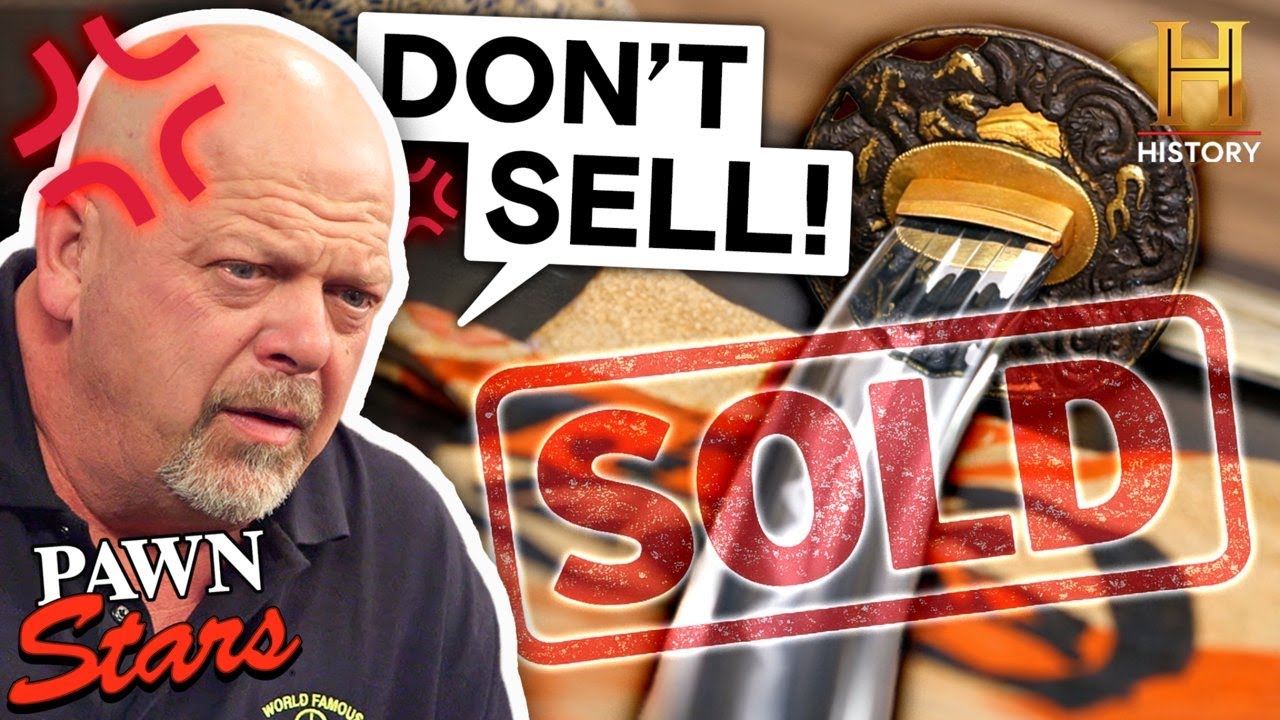
– What’s up, man?
– I got surprise for you.
– Okay.
Over two years ago, I sent a samurai sword to Japan to get fully restored. Finally, it’s back in the States, and Mike brought it to the shop today. I can’t wait to see this.
– After all this time.
– Should have a drumroll?
[fingers tapping] [laughs] – Today I’ve got Rick’s personal sword. This sword was made in the early 1600s. During that time, there was a lot of one-on-one duels. So the blade has a different kind of shape made to cut very clean and very fast.
Here it is.
– There we go.
– Ooh-wee, that thing looks sweet.
– Oh, that’s nice. No chips in it or nothing.
– It came up perfect, no flaws.
It took a little while, because I had the best of the best work on it for you in Japan.
– It does look pretty amazing.
The blade itself was made right around 1500, right?
– You know, before it was polished, it gets a little hard to tell, but after it’s polished, we can see the detail more clearly.
– Okay. – Early 1600s is what we agreed after the polish.
– Okay.
And we got all new hardware on it?
– Yes.
We changed the case into a new one here, and this is actually done with real Japanese urushi lacquer made out of poison sumac.
And we did a special handle wrap in the old traditional way, and we did early 1600 fittings.
So we gave it a nice new look, the old traditional way, but now, since it’s all polished and everything, you’re gonna have to have someone to take care of it.
– Okay. – They used to do this in samurai movies after battle.
This is called uchiko.
This is the final powdered form of polishing stone.
– A little dab, dab, dab.
– Basically, what it does is, it takes off fingerprints, old oil, dirt, and dust.
– What did we actually pay for that thing?
– I think I paid, like, $6,000 for it, like, 10 or 11 years ago.
How much was the restoration?
– Including the parts? Give or take about 10,000.
– So what’s it worth?
– Well, since it’s all in perfect condition now with all the new different set of fittings, I’d say you’re looking at the sword value in around 35,000 to 40,000 territory.
– Okay.
So, I mean, at 16,000, it’s worth 35,000 to 40,000.
I think I did all right, but it’s not for sale.
I’m just putting it in the case, so…
– What do you mean it’s not for sale?
– Not for sale, pretty self-explanatory.
– If $16,000 was the merchandise, it’s for sale.
– No, it’s absolutely amazing.
Thanks a lot. I appreciate it. – Congratulations.
– Do not screw my sword up, just gonna put it on display, all right?
– Hey, what’s up, man? – What’s up? How are you?
– How are you doing, buddy? – Good. Good to see you.
– Hey, Dana, how you been? – Good. How you doing?
– Just imagining what it would be like to play with this knife Rick won’t let me touch.
– That’s why I’m here. [laughs] I’m building this weapons room in my house, and what I’m really looking for today is a sword.
Show me something good.
– I’m pulling a few down.
– This one’s from the Civil War, right?
– Yeah. – Okay. What else you got?
♪ That’s cool-looking.
♪ This one is the most comfortable out of all of them.
– Do you have any samurai swords in your collection?
– I have some swords, but no real ones.
– You know what? We have a samurai sword over here, and we can trace it all the way back to the samurai family.
– That’s perfect. – Yeah?
– Show me that one. – All right.
– What sword are you talking about?
– The one your dad said don’t sell.
– Now, I really want it. [laughter] – It’s just right over here at this case.
There you go. We had it restored in Japan.
♪ – Well, that’s ridiculous. That’s beautiful, man.
– This sword is from the 1600s.
It looks like it was made just yesterday.
– Right. – The word “samurai” means “to serve,” because you were there to protect and to serve the emperor.
It was one of the highest honors.
You didn’t get more respect than walking through the streets coming from a samurai family.
– Keeps getting cooler and cooler.
I like it.
– It was passed down to generation to generation, and if you take this off, on the handle down here, there’s some writing that traces this blade back to the exact family.
– He’s putting on the hard sell here.
I was sold already.
– So when a guy says “sold,” Chum, you typically give him a price.
– I know. but I wanted to give him a little history before I just drop a price on him, ’cause something like this is $40,000.
– Is that the price?
– That’s the price, $40,000, and– and they are very hard to come by.
– Right.
I’ll give you 28,000. – [laughs] Man.
Whew.
I started a little high so I had room to negotiate, but I think 35,000 is about where I’m sitting.
♪ – I’ll go 30,000.
– Don’t look at me, man. This is your big deal.
– 30,000, huh?
– I’ll tell you what, I’ll take this for 30,000, and I’ll buy every one of those swords that you showed me over there too.
– So another 30,000 for the other swords.
– It’s all on you, buddy.
♪ – You know what?
♪ That’s a deal I can’t refuse.
All right, it’s gonna take me a little while to package everything up, so…
– Okay. – Can you come back in a little while? – Done.
– See you later. – All right, man.
– All right, brother. – All right.
That’s how you do business, Corey.
– Yeah, that’s how you make commission, Corey.
– Yeah.
– You didn’t want me to sell that.
I did make a good deal.
– You got lucky.
– I was born lucky. I didn’t get lucky.
What’s up? – Why is my sword out here?
You know you’re not allowed to play with it.
– First off, that is no longer your sword.
I sold it.
– What do you mean you sold my sword?
– Rick, first off, we got to get over this ownership thing.
It’s not yours anymore.
– It was bought by the store.
It was paid to be refurbished by the store.
This store sold the sword for $30,000, plus an additional $30,000 worth of stuff.
– Is the customer still here?
– Yeah, why don’t you go tell him he can’t buy it?
– I will.
– See if you can kick his ass for it.
– Hey, Rick, bring me my commission back.
He’s gonna get his butt whupped.
♪ – Hey, Dana, what’s going on, huh?
– What’s up, buddy? Good. How are you doing?
– So I’m assuming you’re the one who bought my sword.
– I did. – Okay.
– The fact that you didn’t want to sell it made me want it more.
– Well, you’ve already paid me, so…
If there’s one person I’m not gonna argue with over this sword, it’s Dana White.
– You mad at Chumlee?
– Um, yeah.
It took me two years for that sword in Japan to get it back.
– It’s beautiful. It’s awesome.
– So I have an old sword I just bought.
You want to see that one? – Yeah.
– Now, this one’s pretty amazing.
I mean, it’s not as old as the other sword, but this one belonged to a Japanese Lord, and I was gonna ship it off to Japan.
So if you want to take it to Japan and wait two years to get it back, you can.
It’ll probably be between 6 and 10 grand to get it fixed.
– Right, I actually like it like this, beat up and old.
How much?
– That one I’ll take 10 grand for.
It literally belonged to a lord in the Japanese Civil War.
It’s sort of their version of, like, General Grant’s Sword.
– Got it.
Well, I just bought half the swords in the place, so…
– Yeah.
– Will you give it to me for eight?
– Can we do nine?
♪ – Yeah, I’ll give you nine for it.
– Sweet. Cool, man. – Yeah.
– I’ll have Chum wrap this one up too.
– Perfect.
I love the whole Japanese Samurai tradition in the story, and it’s a beautiful sword, so I couldn’t refuse it, so I took that one too.
– Hey, can I help ya? – Hey, how you doing, sir?
– Pretty good. – All right, all right.
– What do you got here? – Man, I got a couple swords– what–three swords from a katana.
Trying to get rid of ’em.
I just can’t put ’em on the mantle no more.
They just laying around. – Yeah.
I don’t know if you have a wife or a girlfriend, but I’m sure she doesn’t wanna look at this up on the mantle…
– Absolutely. Absolutely. – All day.
I’m at the pawn shop because I wanna sell these samurai swords I have today. I had ’em for 20 years. You know, they kinda raggedy a little bit, but the blades are really sharp. They collecting dust.
– Where’d you get ’em? – It was my ex-father-in-law.
He said he was over in Japan. He picked ’em up, and he gave ’em to me as a gift.
So I’m thinking they might be worth something now.
♪ – Right after World War II, the United States, they were helping to rebuild Japan.
And during that time period, they confiscated a lot of stuff like this.
And then they would put these tags on ’em in hopes that they would be returned later.
But instead of returning ’em, a lot of soldiers decided, “You know what?
I would like to take this home as a keepsake.” These could’ve been in someone’s family for, you know, 100 plus years.
It’s hard to tell, because usually the mark will be underneath the handle.
You know, that’s not something that I’m qualified to do– is take the handle off, and look at the mark– because I wouldn’t wanna ruin this, you know.
– Right.
– A good thing I do see is, it seems to be the right sheath, you know.
It butts up right against there nice, and it fits really snug. – Got ya.
– A lot of times what you’ll see is, these will become so old that the sheath will break down completely and someone will find just a makeshift sheath to put the blade in and it won’t fit like that.
As you can see, it’s cracked all the way down and…
♪ It’s pilling– and the same with this one.
Even though they’re in really bad condition, it is cool to have the original sheath, you know.
What are you looking to do with ’em?
– Well…
I’m about to enter in a barbecue competition.
Entry fee is kinda high.
And then I need to buy my product.
– Well, I’ll let you barbecue at my house for free anytime.
– Anytime? [both laugh] – I’m thinking Rick might want me to call in an expert before possibly buying these swords, but this man has a barbecue competition to get to. I ain’t one to stand between a man and his grill. And like a samurai, I must act swiftly before this guy walks out the door. – How ’bout 6,000?
[tense music] – Um…
I don’t doubt that they’re worth close to that value.
Samurai swords are highly collectible.
But my problem is, I gotta resell ’em, and I gotta make a little profit too.
If you wanna sell ’em today right now, I can do 34.
– [groans] 4,000– out the door.
– Let’s split the difference.
I’ll go 37. – [sighs] 3,850.
♪ – You know, I’d hate to see ’em walk for $150.
I think I’ll take a chance with these.
I can do the 3,850.
Hopefully my boss doesn’t cut my head off.
– I hope he– not with these swords.
3,850– I’ma buy some briskets, pork, and some ribs and some chicken, and I’m gonna slice up this competition.
– Hey, just the man I’m waiting to see.
Why don’t you shed some light on these for old Ricky over here.
– Rick, you don’t look very happy.
– Yeah, apparently I don’t need you anymore, because Chum knows everything there is to know about swords now. – Well, I told you to call me if you ever needed some help.
– It was basically make a deal on these swords and get ’em now, or don’t get ’em.
The guy was in a hurry. He had to get off to a barbecue.
– So can you tell me about these things?
Or–or should I ask you?
– Want me to look? – Yeah, check ’em out.
♪ – I’m gonna take the handle off so we can see if it’s signed or not.
– Okay. – This one is very tight, so it obviously hasn’t been off for a long, long time, which is a good sign.
And it has a signature.
So generally, when you’re looking at swords to buy, you always wanna check the tang to see if it’s signed, to see if anybody famous made the sword.
This title with this type of file marks belongs to a swordsmith known as Naganobu.
– That’s good news so far.
– It is good news because he’s actually well-known and he’s very famous.
Okay, so the blade is in good condition.
There’s no flaws. It has one small nick.
So this is actually a very decent sword.
– So is it considered a sword, being that short?
Or is it a knife?
– Generally, it’s called a dagger.
It’s koa tanto. – Okay.
– It qualifies as a dagger, but it’s still a sword in a sense.
So we’ll move on to the next piece.
[tense music] – I’m kind of excited to see what you have to say about this one.
– So believe it or not, the entire sword is held together by this one bamboo peg– all through battle.
– I remember when you had taught me that last time you came here.
♪ Let’s see if there’s any markings on this one.
♪ – Well, you’re lucky on this one too.
It’s actually signed.
So it’s full signature here, and the sword has got some good age to it.
– Well, how old is that one?
– This sword dates from the late 1400, early 1500s.
[jazzy bass music] – [exhales] I need to stretch a little bit. – So…
– Oh, I’ve been making some good moves.
♪ – May I? – Please.
What a beauty.
– Well, the pin’s missing, so…
That’s the traditional way of removing the handle from the hilt.
[dramatic music] Oh, it’s signed.
♪ – Another signature?
– This sword is signed, “Soshu Ju Akihiro.” He’s one of the most famous makers of Japanese sword history.
You know, people spend years and years and years looking for the holy grail of Japanese swords.
They’re worth up to $3 or $4 million.
♪ – I like where this is going, Rick.
♪ – Unfortunately, the signature appears to be a forgery.
– [sighs] – So when was it forged?
Like, maybe 100 years ago, 200 years ago?
– No, no, the sword is actually old.
It’s just that it was so popular to have such a famous name given to lords and other lords that they actually made forgeries on other blades that were available from the same time period.
So this blade is actually old.
It is from, like, the early 1400s.
– What are they worth? – Well, as a package, you’re looking at about…
[suspenseful music] 13,000 for all three.
– I’m not gonna congratulate you.
It doesn’t take skill to win in a slot machine.
– If you ever need my help, I’m there for ya.
– [sighs] Thanks, man, I appreciate it.
– [laughs] – You’re welcome.
– I was talking to him, not you.
– Chum actually got lucky, and he did well.
It’s a roll of the dice when you’re buying swords.
Finding three older blades is very rare. Finding three older blades that are signed is extremely lucky.
– I just made you 9 grand.
You can pay me with a free lunch today.
– Will you put these away?
– You really want me touching them?
They’re worth $13,000.
– [exhales sharply] RICK: Hey. How’s it going?
Hey.
Pretty good.
James is my name, and sword is that type of game we’re looking at today. – OK.
[laughs] [blades clanging] JAMES: I’m coming to the pawn shop today to see if I can sell my samurai sword.
I paid $800 for it.
I’ve got my use out of it.
I’m hoping to get about 6.
That would be nice.
RICK: So do you know what you got here?
An old military samurai sword.
Picked it up at auction.
OK.
This is an NCO sword, non-commissioned officer.
Yeah.
I was a non-commissioned officer in the Navy.
Swords are such an important part of Japanese culture that as recently as World War II they were still carrying them into battle.
The US Army actually had to teach GIs how to defend themselves against a sword in hand-to-hand combat.
It wasn’t uncommon for a Japanese officer to carry around a 500-year-old sword on his side.
The thinking was they had never lost a war.
They weren’t going to lose this one.
And this is the scabbard that came with the sword.
That’s a good thing.
It makes it worth a little bit more money.
But it’s not a samurai sword.
Normally on a real samurai sword that would be eel skin down there.
And this would be wrapped in silk.
But you can see that it’s all just one piece aluminum.
When the Japanese army was disarmed at the end of World War II, a lot of their weapons were destroyed.
So these are actually valuable– not samurai sword valuable, but collectors seek them out.
It’s got some dings in it, Rick.
OK.
One of the problems with these things is GIs brought these home from the war.
And inevitably what would happen is some kids would get a hold of it.
Next thing you know, they’re in the backyard sword fighting with them. – Exactly.
That’s how you end up getting like that chip right there.
It’s not pristine, but it’s in really good shape.
The blade isn’t all rusted up.
It hasn’t been resharpened.
That’s good.
So what do you want to do with it?
I’d like to sell it.
And how much did you want for it?
I was hoping about $800.
$800 is not going to happen.
I mean, I will get $600 out of this thing tops.
So I’m thinking more in the neighborhood of $400.
$400?
$400.
[sighs] That’s a little lower than what I thought.
How does 5 sound?
Sounds better at 3.
RICK: [laughs] I’ll tell you what.
I’ll meet you in the middle at $450.
All right.
RICK: OK, $450.
JAMES: Yeah, I’m somewhat disappointed at the offer, but– and the market conditions the way they are.
It is what it is.
– Hey, how’s it going?
– Going great.
– What do we have here?
– I brought you in my samurai sword today.
– Okay.
Did you get this off a samurai?
– Not off a samurai.
It’s been in my office for about 10 years, and I haven’t pulled it out too much.
– Why would you pull it out? I mean, home defense.
[laughs] – I’m looking to sell my really cool samurai sword today. So I don’t know a whole lot about the sword. There’s a lot of mystery to it. I got the sword as a gift from a client about 10 years ago. The sword has about a three-foot-long, really sharp blade. It’s got a really cool handle. I’m hoping to get $7,000 for my sword today.
– I mean, I’ve had tons of samurai swords in the shop over the years, and they’ve always sort of fascinated me.
Just every part of the world, I mean, constantly, their swords are changing, but the Japanese came up with this design and stuck with it for, like, a thousand years.
They had a process for making the edge really sharp and with really, really strong steel.
Right behind the edge, it was softer steel so when you hit something, it would keep an edge, but it wouldn’t chip and break. You’d just go on and on and on about how cool samurai swords are.
Now this one, all right, kinda odd.
I mean, the blade looks really old.
The scabbard right here looks brand-new, and the handle looks not as old as this.
So, um–I just don’t know enough about it.
I mean, this is literally a science in itself.
So how much you looking to get for it?
– 7,000. – Okay.
That–it could be worth that, or it could be worth more, or it could be worth less.
But I do have a guy who will know.
Did you mind waiting? – Not at all.
– All right. I will be right back.
– I welcome an expert to come and look at it because I’m really interested in finding out more information about the sword.
Well, I have another one for you.
And what do you think it is?
– A sword.
– Okay, we’re getting better after all these years.
– This looks brand-new… – Yeah. – And the handle looks 20th century maybe.
– Yeah, I would say so. – The blade itself, though, I have no clue, so I called you.
– All we can do is take a look and take it from there, right?
Be interesting to see what’s on the tang, you know? – Would you mind if he takes it apart?
– Not at all. Have a look-see.
♪ – It does have a signature, Kaneyasu, a smith from the 1600s.
– Is he a big deal?
– He’s a good, you know, moderate smith.
He was well liked.
So what you have here is an original sword from the 1600s.
Original tang, good signature. That is well worth $10,000.
But unfortunately, it has fire damage.
♪ One of the biggest problems with iron or steel weapons was fire.
You can see on the tang it has fire scale, which means the tang was exposed to high heat, so that’s why it lost its hardness.
– So it got really hot, and it just doesn’t have the properties it used to have.
– No.
Most likely, it was used in a battle, guy gets kille.
Somehow, either the house or the castle caught on fire, and the sword fell on the ground and burned.
– Okay, and that would make perfect sense why we have all this new stuff, because the original stuff burned to the ground.
– Yes.
Unfortunately, this sword is just a shadow of itself now.
– So what’s it worth? – In its current condition, it’s only good as a tool or practice sword since it’s no longer collectible, which would mean its value is $500.
– Disappointing. – Thanks for coming in, man.
– Okay. I’ll see ya. Thank you, sir.
– Thank you.
– So it’s not a $7,000 sword.
It’s not a $700 sword. It’s a $500 sword.
Tell you the truth, I don’t want it.
– Really. – If I sell this to somebody, I have to explain that it’s badly damaged, which then makes it a nightmare to sell, and it’s just– it’s not worth my time.
You have a really cool sword from the 1600s.
You could put it on the mantelpiece, say it was probably in a battle.
I mean, it makes a great story, but it’s just not for me.
– Well, thank you for bringing someone to look at it, and I’ll just take my sword and tell those stories.
– Okay. – Thank you.
I didn’t make a sale. However, I’m really glad the expert came today.
He sliced through all the mystery, and now I have some information about my sword.
– Hello. – Hey, I’ve got something really interesting for you today.
– All right, let’s see what you got.
– It’s a Japanese tanto from World War II.
– Interesting.
– What makes this different to a normal tanto is that it has, like, a lip on the back of it, and it’s a different shape.
– Pretty cool.
A very useful weapon to have on the battlefield.
You could use this as self-defense.
– That’s cool. Defensive can opener.
[laughter] I’m here at the pawn shop today because I’m trying to sell my World War II Japanese tanto. I was given it by my martial arts teacher about 11 years ago. It’s got some faded Japanese writing on the side. It’s got a really cool little stamp symbol on the hilt. I’m looking to get $7,200. My wife is six months pregnant, and I’m gonna put it straight towards, you know, the baby fund.
[gong reverberates] – It’s pretty awesome. I mean, I could see how it could be called a tanto, but I don’t think it is.
I think it might be a kabutowari.
– Ah, OK. – Have you heard of that?
– No, I haven’t. – So a kabutowari would be– I’m probably butchering the name, but the name roughly translates into, like, “skull breaker” or “helmet breaker,” something like that.
And this little piece right here would be to reach up and flip the helmet off.
– Oh, cool.
– And then crack someone on the skull with it.
[laughter] But I’m confused because they wouldn’t normally have a sharpened edge.
Kabutowari, it was, you know, meant to be a blunt force, a blunt strike, you know?
So I’m a little bit confused as to what this actually is.
But it’s a really cool, interesting piece.
Have you ever taken it apart and looked it for any markings?
– No, I haven’t personally.
– I’m actually kind of intrigued here.
How much are you looking to get? – I was looking around the 7,200.
– Before I can buy this, I want to know exactly what it is.
– Fair enough, fair enough.
– If you have a little bit of time, I would like to call down Mike Yamasaki.
He is my expert on all things sword-related.
Anything with a blade from Japan, he knows about it. – Absolutely. Sounds like the right thing to do.
– All right. Let me go give him a call and see how long it will take him to get down here.
– OK, no problem. Thank you.
♪ – Hey.
– How you doing? – What’s up, Chum?
How are you doing? – Hey. Nice to meet you.
– Nice to meet you.
– So this is what I called you about.
I’m not even gonna tell you what I think it is.
I’m just gonna wait to hear what you think.
– Well, I’ll tell you, that’s a very interesting piece. ♪ It’s in the shape of what’s known as a kabutowari, or a helmet breaker, but it has a temper line like a Japanese sword, and it has an edge. Some people would think that maybe this was a tanto that was modified by grinding down the back to make it into a combination kabutowari tanto.
But see the carving here of the ken sword?
See how low it is? If it was actually in a tanto, it would have been higher.
It would be way up here, and it’d be gone after they ground it down.
So I almost am inclined to believe it was made this way.
– And would that be really rare?
– Yes, I’ve never even seen one like this.
– Really? – Do you mind if I use you as the test dummy? – Go ahead.
– [laughs] So kabutowari used to be to move the helmet and hit because they didn’t have an edge.
However, armor has under the neck, under the armpit.
So the way that this is shaped, and it’s pointed in this sense, it looks like it’s actually made to go through the hole in the armpit straight to the heart.
– Oh, OK.
Are you noticing the maker mark on it at all?
– No, I have to take it apart.
– Do you think it’s OK if Mike takes it apart?
– Absolutely.
♪ – Mm.
This is quite interesting.
There’s no maker name, but it’s got some age to it, probably from around the late 1700s, early 1800s.
This is quite something special.
– How special is it in dollar terms?
– [laughs] Well, I’ve seen some very high-end kabutowari, right?
This would be a solid $5,000 piece.
– All right. I appreciate you, Mike.
Thank you. – No problem.
– Thanks so much. I appreciate it.
– So after hearing everything Mike had to say, what are you thinking?
– I mean, he’s saying 5.
I would need more than that. – All right.
Well, we’re not gonna come to a deal today because I’m gonna offer you much less than that, you know?
– Yeah, I see that.
But to be honest, just learning all the history of it makes it hard to sell it when you know how unique it is.
– You know what? I don’t blame you.
If I could have bought this, I would have probably tried to get it for my own collection.
– Of course. Thank you so much.
I appreciate it. – My pleasure.
– How are you?
– Pretty good. How can I help you today?
– I have got a World War II Japanese officer’s sword.
– You mind if I take it out?
– No, go ahead.
♪ – What makes you believe this is from World War II?
– Well, my dad was a captain in the army.
He brought this back when he came back from Japan.
– So your dad took this as basically a war prize.
– Yes.
[blade resounds] ♪ I’m at the pawn shop today to sell my Japanese officer’s sword from World War II. I think the sword is really unique because of the tassel on it and the family crest that’s on it, and it’s in very good condition. This sword has got some sentimental value simply because it has been in the family for so long, so I’m really wanting to find out more about it. I’m hoping to get $2,000 for my Japanese sword today.
– It is really cool.
Right around 1945, Japan had surrendered, and they were instructed to give up all their weapons.
So the weapons in Japan were fully confiscated, and these guys had to even give up their personal family swords, which was very, very hard to do.
A lot of swords in Japan had a tremendous amount of traditional value and family value to them, and some of those swords were in families for hundreds and hundreds of years.
So what do you know about this sword?
– Well, my dad– he told me that when they were asked to surrender, they had dug a huge hole.
♪ They just started throwing the guns and knives and everything into this huge hole that they had dug.
You know, the soldiers that were around– they started grabbing them, and then, of course, he put them in a duffel bag and brought them home.
– And that’s what happened to a lot of these swords.
They were taken as war prizes.
♪ Okay, let me take a look here.
This is pretty cool.
Just looking at the blade, I don’t really see any nicks or anything.
It’s in what seems to me to be pretty good condition.
It looks like there’s a family mark on there, so maybe that can paint a better picture of where the sword is from, the time period it was actually made, and if it truly did come from Japan.
♪ What are you looking to do with it?
– Sell it.
– And how much are you looking to get?
– Well, I don’t know, I’m thinking maybe around 2,000.
– That’s not out of the question at all.
It seems reasonable enough that I want to call someone down and take a look at it. – Okay.
– Give me a few minutes, and I will get someone down here, take a look at the sword, help me determine a value, and then I can negotiate on a price for you.
– Okay.
– Let me see if I can get him down here, and I’ll be right back. – Okay, great.
Thanks.
I hope the expert values it more than what I’m asking, It doesn’t look like your typical Japanese sword.
– Yeah, what you have there is a very unique piece, in a sense.
It is Japanese, for one.
It was during the time when there was a lot of Western influence on the country of Japan.
They started modeling their new military after Western culture.
So the D ring style– they took an American idea, and they made it Japanese.
You could see it has the ray skin on the handle.
– Can I ask what the ray skin– what is that made out of?
– It’s a ray. Stingray skin.
– Stingray, okay.
– In traditional Japanese sword mountings, they use the ray skin to strengthen the handle, made it pretty durable.
So you can tell just from that that it’s a Japanese sword rather than a Western sword.
♪ Your permission? May I…
– Yes, sir. – Okay.
So… as you can see, this is all ray skin here with the wire going around it, so it makes it a really anti-slip grip for war.
This tassel here, the orange and brown color, tells us this is a colonel grade.
– So would a sword like this been more for dress purposes and used if needed, or…
– Yeah, it would be more for dress or functions, you know, type of thing.
I mean, somebody at this level, whether he really saw combat or not was questionable, depending on what his actual duties were.
But from the condition of everything, it looked like he probably didn’t go to the field too often, in this sense.
Most of this wear and tear came after it was surrendered.
♪ – So what kind of price would you value this sword at?
– Well, with the fact that it has a real colonel-grade tassel, which is $100 by itself, I would say 600 is about the right price.
– Okay. – All right.
Thank you, Mike. – All right.
Any time.
– Maybe next time, we’ll swing some swords after we’re done.
– Yeah, that’d be fun.
– See you later. – See ya.
Take care. – Thank you.
– Bye.
– Well, not the 2,000 you’re looking for.
It still does have some value.
If you do want to sell it, I would love to buy it at 400.
– Okay.
And that’s your top price?
– It’s leaving me $200 room, you know, and that’s pretty fair.
I probably would have offered you about 200, 250, without this, but I just think this is so cool, I’m willing to pay the $400 for it just because it helps me sell it.
♪ – Okay. I think that sounds good.
– All right, meet me over here at the counter, and we’ll get you paid.
– Okay. – Thank you.
– Thank you.
My asking price got slashed, but I’m glad we cut a deal. So now, I can take my wife out, and we can have a nice dinner.
– How you doing? – Good. How are you today?
– Pretty good. What do you have here?
– Um, I have something interesting for you to look at today.
– Wow, this is pretty cool.
It looks like a tanto, which is basically a Japanese sword.
But it’s not a sword because a tanto is much shorter.
A lot of times, they would battle on horse, and you know, if you were able to knock someone off the horse, you would jump, off, you know, pull off their helmet and slice their neck.
– Wow.
– Because it would be much easier than pulling out your long sword and stabbing him.
– I have a Japanese wooden sheath that I’m trying to sell today. The sheath has a few marks, but overall it looks like it’s in good condition. I’m hoping to get about $500.
– This is a very useful tool in war.
It’s weird ’cause it’s not sharp at all.
– Hmm, that’s interesting.
– Oh, there we go. It’s a little sharp, I guess.
It’s just dull.
Where did you get it at?
– I got it in a garage sale.
Thought it’d be interesting for my husband’s office, and then I spoke to the older gentlemen and found out that he was in the Air Force at one time, and my husband was as well.
– That’s pretty cool.
Think you got a really good find right here.
Things like this would’ve been brought over from Japan after the war.
It seems like it’s in good condition, you know?
Do you know how old this is?
– I do not. – Yeah, I don’t either.
It’s…
literally, these have been around 1,000 years.
This could be a couple hundred years old, it could be– – Oh wow, wow. – A thousand years old.
I don’t know.
Do you know how much you’re looking to get for it?
– Um, I was thinking about $500.
– Mm-kay.
Unfortunately, this doesn’t seem to come off too easy.
This handle should come off, and there should hopefully be some markings on the blade, which would tell us a lot more about the story of this and maybe where it was from and possibly even who could’ve maybe owned it.
But I’m not really qualified to take that off, even though I do know there should be something under there because I don’t want to break it, and if it is 500 years old, I’d hate to be the one to damage it.
Could I get my guy Mike down here to come take a look at this?
He specializes in all types of swords and this would be right up his alley.
If you have a few minutes, I could give him a call, see if he can come take a look.
He’ll let us know if this thing is worth $500 or $5,000.
– Yeah, I appreciate that. – All right.
Give me just a minute, all right?
– Thank you.
– Oh. – What do you think?
to see if he can remove the blade from the handle. – [laughs] lo. and then maybe we can put a real value to this.
– Truth is, I know very little about it, so I called you down here because I just wanted you to look at it and see what you know about it.
[tranquil music] – Do you have any idea what this really is?
– It’s a tanto, right?
– Not really.
– Okay. What…
– If you notice, on tanto, the edge would be on this side, and it would have a point, right?
– I thought it looked a little different.
– What you have here is a very unusual piece.
It has its own classification, actually, not as a tanto or a wakizashi, but this is called a hana katana.
There was another type of art that the samurai used to create peace and tranquility in their life, and that was flower arrangement, called ikebana.
And this is called a hana katana, which is used for cutting the stems of the flowers for arrangement.
– It’s not a war knife? – No, not for war.
– I thought it was a tanto. – So this is more for peace.
– That sounds a little more appealing to me.
– But what I did notice…
you see, the pin is in here, and usually we could take it out to see if it’s signed by the maker.
Unfortunately, sometimes when people saw that something was loose or falling apart in America, the favorite tool is glue.
– No. [groans] – Mm.
– That’s the enemy of all swords.
– So we might possibly damage the item by removing the pin because it’s glued in.
– So as-is, what could I sell this for here in the store?
– Oh, you could sell it for anywhere from 1,500 to 2,000 if we don’t do anything to it.
– Okay. – Yeah.
– But is it possible to restore and get more money for it?
– It’s possible.
A lot is going to depend on if it’s signed and who signed it.
– So you’re telling me I could buy this, spend a couple grand, find out there’s no signature, and just be deeper and deeper in the hole with Rick?
– It’s risky, just like Las Vegas.
– Hey. – [laughs] – I appreciate you, Mike. Thank you.
All right. You heard what he had to say.
What do you want now?
– Do you think you could do 2,000?
– I definitely can’t do 2,000.
I mean, we’re still looking at below the 1,500 mark for sure, because if I did sell it in this condition, that’s what I’d get for it.
Would you take the 500 for it?
– Well, not after I heard that.
But I’m willing to go for about 1,000.
– I can give you 1,000 for it. – Great.
Thank you so much. Appreciate it.
– Let’s come up here and do some paperwork.
– Great.
I was really surprised that I got $1,000 for it, and I’m very excited, and I’ll probably use that money and put it into my classroom.