Josh Gates Uncovers Secrets of a Shipwreck Buried Deep in the Sea | Expedition Unknown | Discovery
Josh Gates Uncovers Secrets of a Shipwreck Buried Deep in the Sea | Expedition Unknown | Discovery

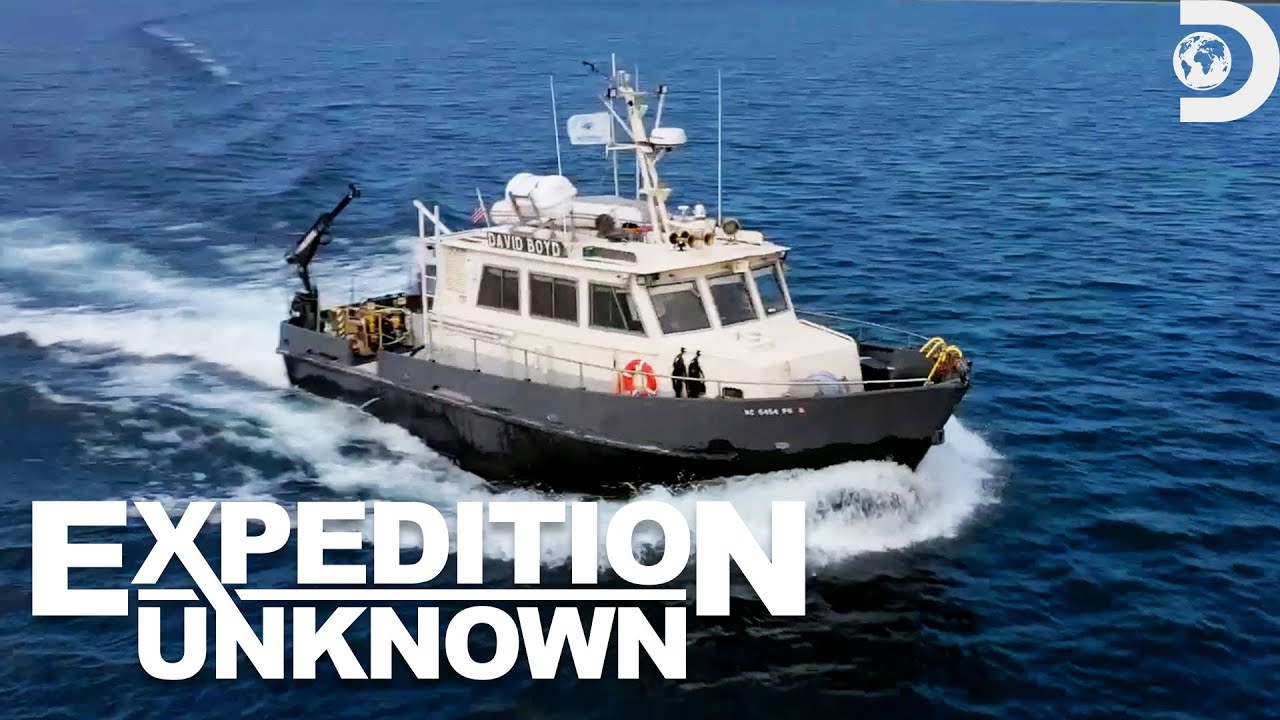
Returning to Whitefish Point,
I head to the research vessel
from the Great Lakes Shipwreck Society.
In command is Captain Darrell Ertel.
I hear you’re a man looking for some minesweepers.
Yes, we are.
Should we go find them?
Let’s go.
Come on.
Darryl is a master of Lake Superior,
having discovered dozens of shipwrecks
over 40 years of exploration.
This ship is really kitted out.
Tell me what we’ve got in here.
Obviously, we’ve got some sonar systems aboard.
Yeah, yeah, we got five plotters.
We got infrared cameras for night vision,
and we’ve got the side scan sonar for Marine Sonics,
the Explorer Two.
And we got a couple of ROVs on board.



I mean, you could do it all from right here.
Yeah, we got the lake covered.
What would it mean to you to find the minesweepers?
It is a great loss of life.
And when we try to find the shipwrecks,
document them.
And it gives families, even though it’s two,
three, four generations down the road, closure.
Right. This is, in a way, a sacred mission
with which the Shipwreck Society is tasked
to settle the ghosts of history
by searching far from where most people have looked.
Okay, so now we have this new lead.
Jack Hubbard saying his great-grandfather,
this guy out of this lifesaving station,
saw these ships offshore much further to the east,
over here in Deer Park.
Do you think he could have seen the minesweepers?
Definitely possible.
We went back and checked the Coast Guard
lifesaving records.
Right. And sure enough, there was a record
of him waving off two ships off the shoreline.
So it could have been the minesweepers.
Could have been.
Darrell has done a preliminary sonar scan
of Jack’s new search zone
and found some potential anomalies
almost 300 ft down.
Luckily, we have a diver aboard
who can easily reach that depth.
This state-of-the-art remote-operated vehicle
has precision thrusters to reach the targets
and real-time video cameras
to relay images from the bottom.
We use a crane to carefully lift the robot
out over the water to deploy.
Okay. ROV is in.
And with that splash, the ROV powers up,
and we’re ready to begin exploring
the unforgiving depths of Lake Superior.
All right. So we are headed down.
Looks like we’re passing 50 ft.
Conditions look pretty clear.
Yeah. Yeah.
Coming up on 120 ft now.
The ROV descends along.
Our anchor line at the other end
is an unknown target waiting in the darkness.
And this is on-board sonar on the ROV.
Yes. The ROV sonar should guide it
to whatever’s down there,
which we’re hoping is a pair of
140-foot steel-hulled minesweepers.
Our target should be down at 250 ft or so.
We are passing 200 ft.
240.
All right. So we could be ten feet from glory here.
Oh, starting to see something on the sonar.
There’s something ahead of us here for sure.
So we want to go straight ahead.
Oh, is that a…
Wreck? We got a wreck.
Look at that!
Oh, my word.
Look at this wreck.