Josh Gates Joins the Search for America’s MIA Heroines | Expedition Unknown | Discovery
Josh Gates Joins the Search for America’s MIA Heroines | Expedition Unknown | Discovery

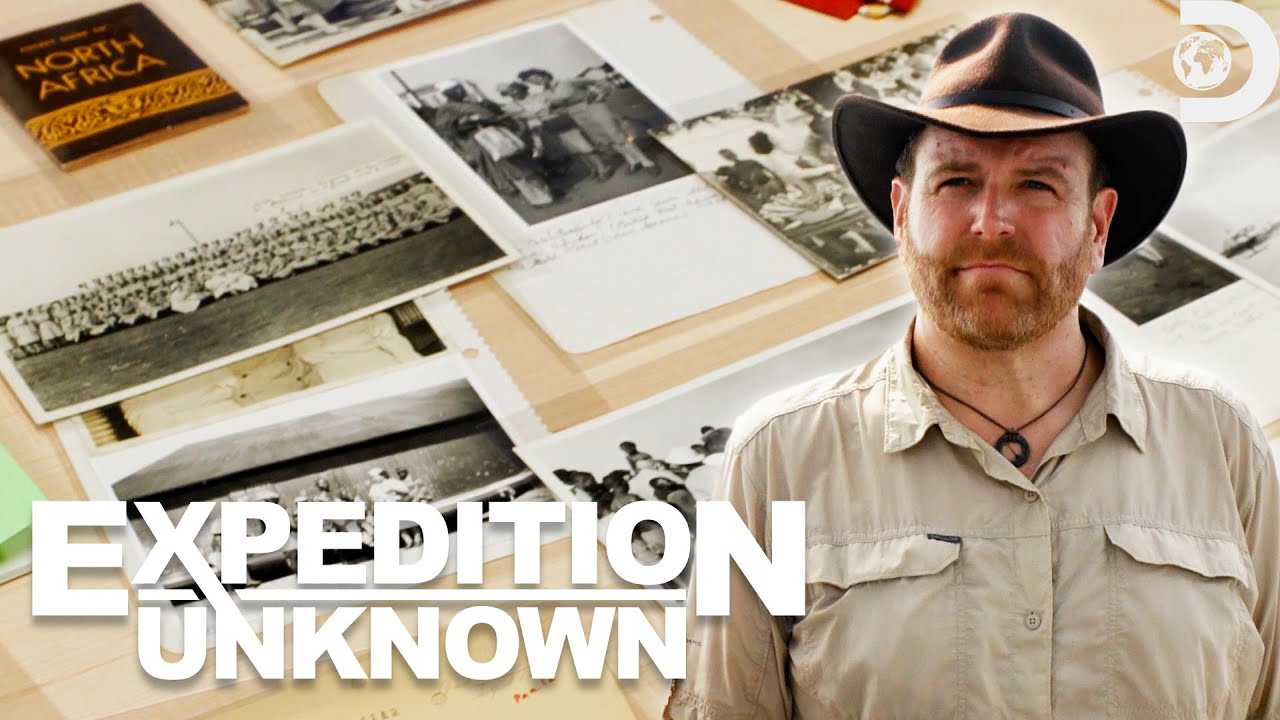
my mission begins at the US Army’s Fort Greg Adams a few hours south of DC.
once on base I make my way over to a one-of-a-kind Museum which Chronicles the long history of women’s service in our military.
Tracy hi Josh nice to meet you nice to meet you too welcome to the United States Army women’s museum.
I am thrilled to be here because I have a lot to learn and I think a lot of people don’t know enough about the women’s Army Corps.



So tell me, who were the WACs?
the WACs were the first women to serve in the army with full military status.
okay it’s an amazing story but I think to understand the WACs we need to go back to the beginning to the American Revolution.
so let’s head this way let’s go all the way back.
come on! really? since the birth of the army in 1775 women have been finding ways to serve.
and so in those early days how are they serving?
they’re serving in very logistical roles important work for the Army.
they’re serving as laundresses, they’re serving as cooks, as nurses, they’re foraging.
then we see a big change around World War I.
okay a great example is the hello girls.
the hello girls were french-speaking American women brought overseas to help with communications during World War I.
it was the first time women had been used in forward service.
that’s really going to lay the groundwork for what’s going to happen in World War II with our women’s Army Corps.
American woman power is a reserve that can win this war.
the women’s Army Corps was founded in 1942, 5 months after Pearl Harbor to bolster the war effort by enlisting women to work as cooks, drivers, and offer communications and medical support.
the original call goes out for a total of 35,000 WACs and over 30,000 women applied.
so right out of the gate 30,000 women apply to this?
yes, and the numbers are going to grow exponentially throughout the war.
seeing these women in these uniforms strikes kind of an emotional note for me.
my grandmother, who was British, served in the UK equivalent of this—the women’s Royal Army Corps.
and we have this photo of her in uniform during the 40s in the UK; she was doing transfusions for soldiers and supporting the war effort.
and the British women were actually an inspiration for what was going to happen in America.
much of the women’s Army Corps was replicated on the service of women like your grandmother.
there we go! nice work, Grammy.
appreciate it, Grammy!
yeah, good job, Grammy!
all right, that’s amazing!
that is incredible to hear.
over the course of the war, 150,000 WACs were stationed all over the world—from Europe to Africa to the Manhattan Project.
it was at the Accra Airbase in what is now Ghana that the 18 WACs were stationed before their doomed flight to London.
so Josh, welcome to the archives.
wow, wow! look at all of this material.
this is incredible! this is the official WAC Archive of the crash and the women who tragically perished in it.
may I?
yes, please!
so we’ve got literal headline news here: “Army plane 18 WACs lost—18 WACs missing on plane trip in Africa. Air and surface craft are searching for a missing plane carrying 18 WACs and a crew of three.”
the WACs are the first ever reported lost overseas.
this must have been a seismic event for the women’s Army Corps.
it really was. it was the largest loss of life for the women’s Army Corps all in one event.
this was national news as well as news in all of the hometowns of these women, and yet so few people know this story today.
right, I agree. but we have to remember that there was a lot going on still at this time in the war.
Germany had just surrendered but we had a big fight left in the Pacific.
with Germany’s surrender, the WACs had the opportunity to go home, but many chose to stay on to support a devastated Europe or be redeployed to assignments in the Pacific.
the fateful flight in question was scheduled to travel from Accra base with refueling and personnel stops in Liberia, Sagal, Morocco, and France before heading to the UK.
there were four C-47 aircraft leaving the base but only three of them made it.
are these photos of the women from the crash?
yes! in fact, here we have the majority of Squadron D stationed in Accra.
wow, so these are all the women that are stationed over there?
so presumably the 18 WACs who died in this one crash are in this photo?
yes! wow!
so we have here Corporal Velma H. Holden and her colleagues: Private Flossy Flannery—
that is the greatest name ever! I love that!
Doris Cooper and Freda Friend was on the plane, right?
so PFC Freda Friend and her husband got married in the states; he ends up being stationed in Accra and then later she’s sent to Accra so they are together and then she was on this plane that ended up crashing on the way to London.
and he found out about it back on the base?
yes, he did. oh, that’s just terrible!
and her colleague is Helen F. Razelle, who joined the WAC to take the place of a brother, Lieutenant Richard Razelle, a pilot whose plane was shot down off of Italy in ’43.
so she’s serving because she has a brother who’s already been lost?
exactly! so she actually does enlist after her brother is missing in action.
so currently they are both on the MIA register.
wow! and who’s this?
so this is actually Helen Razelle here and Odessa Hollingsworth, two of the women who were killed in the plane crash.
look at these two women just hanging out on the beach in West Africa!
what a cool photo!
this is so they are CH Blazers and they’re women in the Army, they’re serving their nation, and they’re also on a great adventure.
that’s right!
and as to this plane, it really just seems like it vanished off the face of the Earth.
you look at the news report and it says the plane was last reported over British West Africa about 150 miles west of Accra, and then nothing.
so they had a normal takeoff, they did their first check-in, and then there was a frantic Mayday call.
but in the Mayday, the pilot doesn’t say what’s happening, does not identify the problem.
so then a major search and rescue operation is launched and it goes on for over a week.
they send out planes, they send out ships—they found absolutely nothing.
no human remains, no debris.
so it is a true mystery!
and a mystery I hope that can be solved.
and we hope so too! this is an important story, and we would be very happy to bring resolution and recognition to the service of these women.
okay, so this is our big geographical marker.
that’s right!
so a half mile off this point is supposedly where our aircraft crashed.
and we could see a fishing village in here.
this is where eyewitnesses were—someone from this village flagged down American searchers to say that they witnessed the crash.
boy, it’s so tantalizing to think that somewhere around us, underneath us, this wreck exists.
it’s just waiting!
it’s just waiting! and you know, we’re the first ones to come looking for it since 1945.
now we just got to find it!
when the WAC plane went down in this remote area, the Army did their best to conduct a search and rescue operation to find it.
they had the same bearing and the same witness statement we do, but we have something that they did not:
state-of-the-art 21st-century sonar!
that tech is brought on board by the remainder of the project recover team.
Josh, you remember Lea, character from Misha?
of course! great to see you!
yeah, you too!
I wanted to also introduce Eric White, he’s our senior engineer.
nice to meet you!
I assume it’s tech time here?
it’s tech time! it’s tech time!
all right, I’ve seen this very dangerous-looking box before—should we see what’s inside of it?
yes!
we unpack the team’s precious cargo.
okay, here we go! it is something to behold!
okay, the Beast! we call this an AUV—this is an autonomous underwater vehicle.
we’re not towing this thing; it’s going off on its own, correct?
and once we’re in the water, Leila, what’s the mission?
once we’re in the water, we’ve pre-programmed it so it knows where to go.
it’s basically going to follow a lawnmower pattern where it’s collecting data up and down these rows.
it sends out a beam of sound; that beam of sound hits the ground.
if the ground is hard, the beam of sound appears bright; if it’s soft, it appears very dark.
so when we look at the image, we’ll be looking for something very bright for an aircraft because it would be hard.
the most identifiable features likely to survive the crash of the WAC C-47 would have been the twin Pratt & Whitney engines, but parts of the hull and tail sections were constructed of steel as