Classified Secret Code Uncovered (Season 1) | Tales From Oak Island
Classified Secret Code Uncovered (Season 1) | Tales From Oak Island

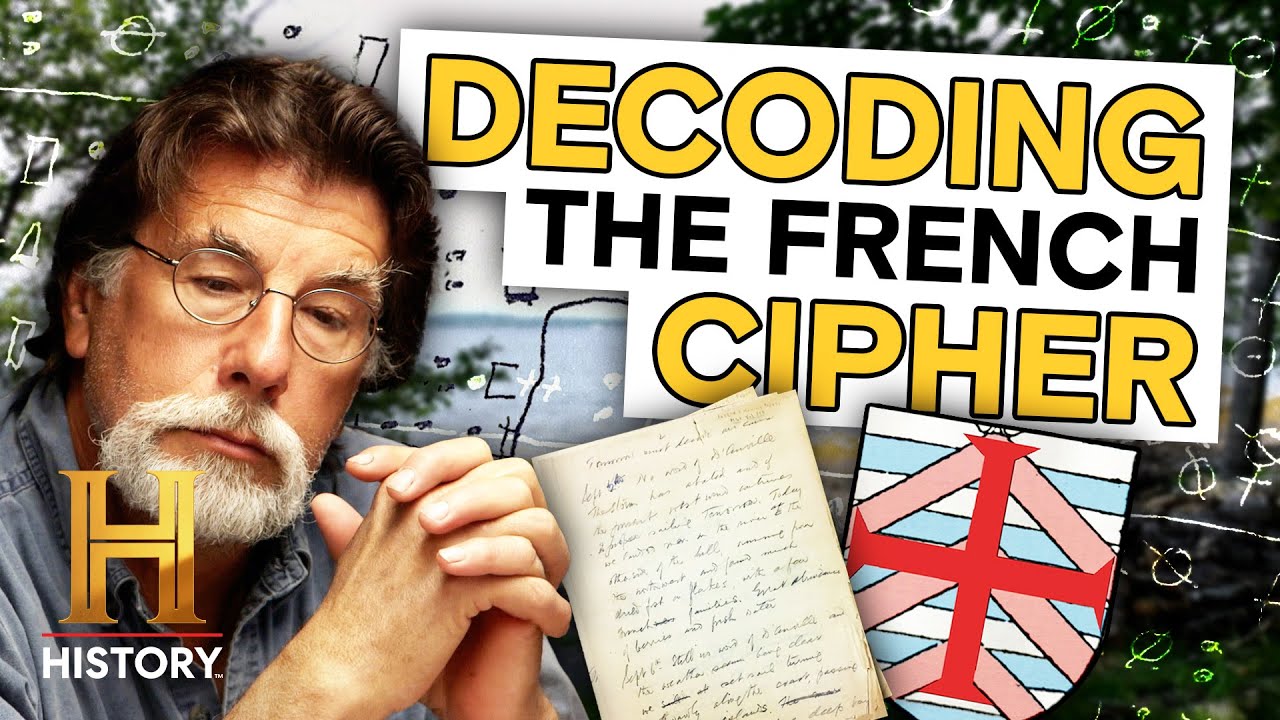
I found Eight Pages of what looks like a ship’s log. In 2017, researcher Doug Croll discovered an English translation of a ship’s log from an unknown French sailing vessel in the Nova Scotia archives. Its contents revealed a potential suspect who may have been responsible for one of these treasure deposits: an 18th-century French Admiral who led one of the largest armadas ever sent by France to the New World in an effort to reclaim Nova Scotia from England. He was known as The Duke Donville.
I discovered information on Duke Donville’s French fleet that was coming over in 1746. Wow, so these eight pages that I found, what appear to be a ship’s log, I’m just going to read through it really quickly here:
September 6: Enter a deep bay, southwesterly of Shukto Bay. So where is Shukto Bay? Shukto Bay is now Halifax Harbor—oh, that was the original name that the French had given to Halifax Harbor.
So on September 6th, the ship’s log was: “At midday, we reached a deep bay with several hundred small islands, wooded to the shore. The great quantity of treasure on this vessel makes it unwise to jeopardize it in any engagement with the enemy.”


September 8th: “It has been agreed that a deep pit be dug and treasure securely buried. The pit does have a secret entrance by a tunnel from the shore.”
September 13th: “Down 67 ft, the pit seems damp from SE seawater. We have decided to go deeper to dry soil.”
Then it ends. And that’s later when the Duke Donville’s expedition to retake the Fortress of Louisbourg finally reached Nova Scotia on September 10th, 1746. 48 ships had been lost at sea, and thousands of sailors had perished during the treacherous voyage. The Duke himself fell ill and died just days after their arrival, and most of the remaining fleet was soon ordered to return to France—all except for one unnamed ship that, according to the log discovered by Doug Croll, was carrying a cache of treasure that was possibly buried on Oak Island.
The Armada may have failed, but was the Duke Donville’s ultimate goal accomplished? The Lainas and their team would soon find compelling clues that he had previously visited Oak Island to ensure that it was…
If the Duke Donville really did order a vast treasure to be buried on Oak Island, what compelled him to choose it as a location? Some believe that the answer lies in a connection between the Rosvucault family and the medieval Order of the Knights Templar. The Rosvucault family was a very venerable family with roots going right back to the dawn of French history. The Duke Donville’s own family had connections to the Templars, and he would have known about their connection to Oak Island for over 100 years.
Some have suggested that the Knights Templar may have played a key role in the Oak Island mystery. This medieval Christian order is best known for leading the Crusades into the Holy Land, where they are believed to have recovered large amounts of treasure and sacred religious artifacts. The Knights were also renowned for their engineering expertise.
Incredibly, researchers have identified sophisticated structures on Oak Island that may have been built by the Templars. If you look at Oak Island and what we find there in terms of tunnels, underground spaces, and the waterworks—like the booby traps and the flood tunnels—it would have had to be skillful engineers who did this. The Knights Templar were very efficient and skillful engineers. They knew how to redirect water, tunnel, and execute these tasks all over Europe, so I think this strongly enforces the notion that perhaps the Knights Templar came to Oak Island and did the original work, burying treasure in North America.
But if the Knights Templar built extensive structures and buried vast treasure on Oak Island during the Middle Ages, then how does that relate to the theory that the Duke Donville and his French fleet undertook a similar endeavor centuries later in September of 1746?
Hello, hi Zena, it’s Doug. Hi. The answer may lie in three intriguing documents that were shown to Rick and Marty Lagina and their team in 2016 by the late Zena Halper, who believed they had been created by the Knights Templar. One was an encoded cipher that incredibly featured symbols also reportedly found on the 90-ft stone in The Money Pit. Another was a 12th-century map of Nova Scotia, and the third was a map of Oak Island dated to 1347, featuring known locations labeled in French.
But another key detail that stood out to the Laginas and their team was a reference to the Rosvucault family, the family of the Duke Donville.
On the Oak Island map that Zena Halper introduced to us, it says that the map was a gift to Francis D’Rash called. We began to dig into this idea that the Rashal family may have been involved in this earlier Templar voyage to the New World.
If these documents are truly linked to the Knights Templar, as Zena Halper claims, then why does the name of a prominent French family appear on a Templar map dated 1347?
Welcome to Royon, home of the Rosvucault cave. In search of answers, Marty Lagina, along with his son Alex and Oak Island historian Charles Barkhouse, traveled to Royon, England, in 2022 to meet with author and researcher Gretchen Cornwall and investigate the Rosvucault cave, believed to have once been a sacred meeting place of the Knights Templar.
“Welcome to a Templar initiation chamber right here,” she said. “Do you see the bricks right there?” Yes. “Up there, on one of the bricks, is literally carved ‘1347.’ I see it now. And that is literally on Zena’s map.”
Is it possible that the Rosvucault cave was a location the Knights Templar used for keeping valuables before secretly transporting them to Oak Island in 1347?
“Anything else here that you think is a connection somehow to Zena’s map?” “Yes,” and she is right behind you. Charles is there. “Do you see a head, a crown, shoulders, a body at the bottom, and then I believe that is a tail? And that I think could be Melusine from the 6th century, who the Rosvucault family claims as their ancestress.”
You believe that is the symbol of the Rosvucault family? “Yes, she is their family crest.”
“I was in Rosac,” I called, “and I took this photo at the Chateau itself while I was there. She’s at the top here, holding up the marble platform for a bust.”
If this represents the Rosvucault family, then that’s another connection to the map.
“Yes, two at least right here.”
Yes, we’re always trying to put a face to this mystery. And in the larger scope of things, Duke Donville was a Rosvucault. We know there’s a reference to the Rosvucault family on Zena’s map, so is it possible that there is some sort of activity conducted here on the island associated with the Duke Donville Expedition?
It’s possible. We were drawn to look at the Duke Donville and his activities because if the ship’s logs are authentic, then they actually made a deposition, and they dug a pit to do that. The Duke Donville Expedition had treasure, and it was a secret mission of some sort. We have that partial record about a French ship digging a giant hole on an island. And so is it possible that explains the deposit of treasure on Oak Island?
Yes, it’s possible. We want to say to ourselves, “The mystery has been solved! Here is the story, here is the one thing, here is why for 228 years this story has survived. Here are the answers.” We don’t have them yet.