The Secret of Skinwalker Ranch | S7 E4 | The Core Drilling Borehole GPR Scanning Combo [HD] [2026]
The Secret of Skinwalker Ranch | S7 E4 | The Core Drilling Borehole GPR Scanning Combo [HD] [2026]

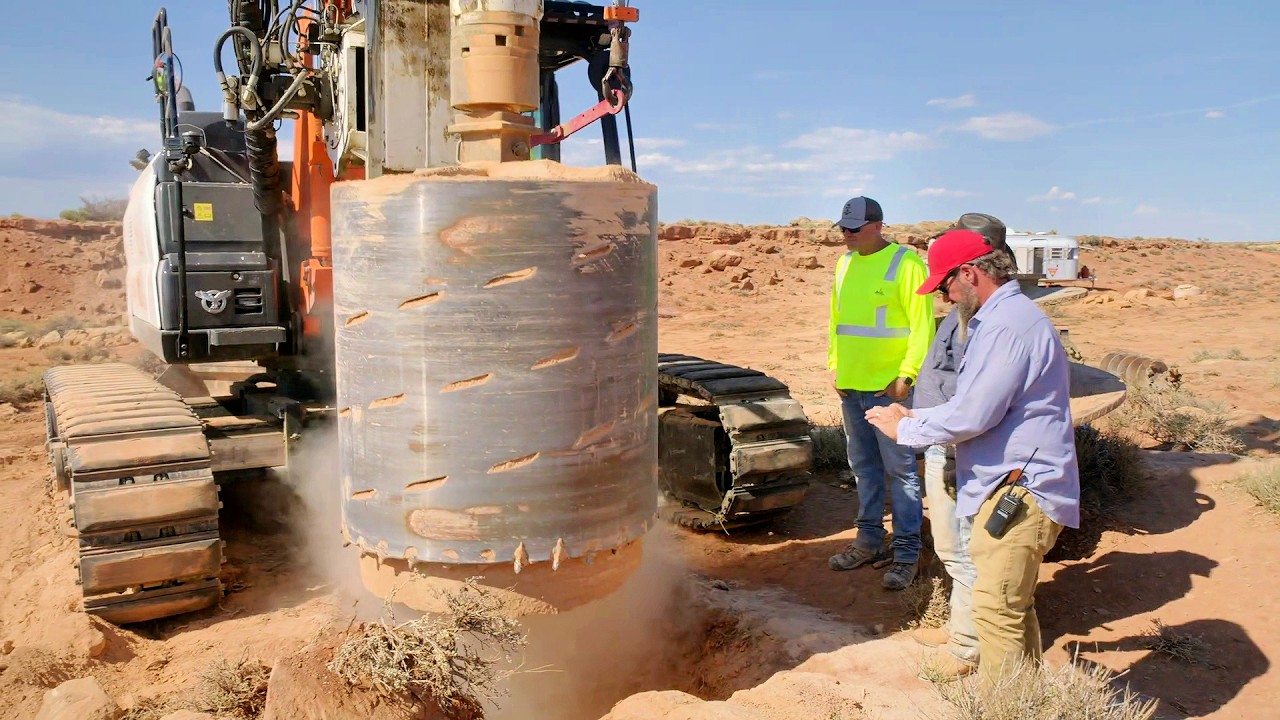
Season 7, Episode 4 of The Secret of Skinwalker Ranch, titled “Smoking Guns,” delivered another major step in the investigation of the mysterious Mesa. While much attention was focused on the ceramic materials recovered from underground and the strange activity around the Bubble, one of the most significant scientific operations featured in the episode was the combination of core drilling and borehole Ground Penetrating Radar (GPR) scanning. The experiment represented one of the most ambitious attempts yet to determine what may be hidden deep inside the Mesa.
For years, the Mesa has remained one of the most intriguing locations on Skinwalker Ranch. Numerous investigations have suggested the presence of unusual structures, metallic anomalies, and unexplained subsurface targets buried within the rock formation. Earlier seasons featured drilling operations that recovered unusual materials and generated data hinting at the possibility of something artificial concealed underground. The mystery intensified in Season 7 when the team launched a large-scale drilling project specifically designed to investigate what appeared to be a significant underground target.
The challenge facing the investigators was straightforward but difficult. Traditional surface-based GPR scans had already revealed intriguing anomalies, but thick layers of rock and complex geological conditions limited the amount of detail that could be obtained. To overcome these limitations, the team adopted a two-stage strategy.
The first stage involved drilling a deep core borehole directly into the Mesa. Rather than relying solely on scans conducted from the surface, the researchers created a pathway that would allow scientific instruments to be deployed much closer to the suspected anomaly. By physically penetrating the rock formation, they hoped to obtain more accurate measurements and determine whether previous radar data truly indicated the presence of a hidden object.




Once the borehole had been completed, the second stage began.
Specialized borehole GPR equipment was lowered into the drilled shaft. Unlike conventional radar systems that transmit signals from the ground surface downward, borehole radar operates from within the subsurface itself. This dramatically reduces signal loss and can produce much higher-resolution images of underground features. The technique is commonly used in mining exploration, geological mapping, and engineering projects where precise underground imaging is required.
As the radar system moved through the borehole, investigators monitored incoming data in real time. According to the team, the results appeared to reinforce previous findings that something unusual exists within the Mesa. Rather than producing reflections consistent with ordinary layers of sandstone and rock, the scans reportedly revealed sharply defined targets and areas of high reflectivity that stood out from the surrounding geology.
The significance of these observations cannot be overstated.
One of the persistent criticisms of earlier investigations was that individual data sources could potentially be explained by equipment limitations or geological complexity. However, when multiple methods point toward the same location, the findings become increasingly difficult to dismiss. The drilling operation provided physical access to the area, while the borehole radar supplied a new perspective from within the rock itself.
This “core drilling–borehole GPR combination” effectively allowed researchers to cross-check one method against another. If both approaches identified anomalies at the same depth and location, confidence in the results would increase significantly.
The strategy reflects a broader trend that has emerged throughout recent seasons of the show. Members of the Skinwalker Ranch team frequently emphasize the importance of collecting data from multiple independent instruments. When technologies such as LiDAR, GPR, aerial surveys, GPS monitoring systems, and environmental sensors all indicate unusual activity in the same location, investigators believe the likelihood of a genuine anomaly becomes stronger. Similar ideas have been discussed by members of the Skinwalker Ranch research community and scientific team during recent public discussions.
Episode 4 also benefited from discoveries made earlier in Season 7. In Episode 2, investigators reported evidence consistent with buried metallic objects within the Mesa. Episode 3 then expanded the investigation through large-scale drilling operations designed to reach those targets. The borehole GPR experiment featured in Episode 4 represented the logical next step in that progression. Rather than simply locating anomalies, the team attempted to characterize them in greater detail.
One of the most intriguing aspects of the experiment involved the geometry of the radar returns. While the show stopped short of making definitive claims, some of the scanned features appeared more organized than would normally be expected from natural rock formations. Researchers discussed the possibility that the reflections might indicate voids, tunnels, or dense objects embedded within the Mesa.
Such interpretations remain controversial.
Skeptics point out that geological formations can often produce radar signatures that appear surprisingly artificial. Fractures, mineral deposits, cavities, and changes in rock composition can all generate strong reflections that may be misinterpreted without extensive follow-up analysis. Independent observers within the Skinwalker Ranch community have repeatedly noted the importance of distinguishing between geological complexity and genuinely anomalous structures.
Even so, the combination of drilling and borehole radar represents one of the most scientifically rigorous methods employed on the ranch to date. Unlike aerial observations or transient sensor readings, subsurface imaging provides data that can be repeatedly examined and compared against future measurements.
The operation also demonstrated the team’s increasing willingness to invest in advanced geological techniques. Rather than relying solely on visual observations or anecdotal reports, investigators are progressively employing methods commonly used in professional resource exploration and engineering projects.
As the episode continued, the findings from the borehole scan were considered alongside other discoveries involving the mysterious ceramics recovered from the Mesa and unusual activity detected around the Bubble. Together, these investigations painted a picture of a location that continues to produce unexpected results despite years of study. The official synopsis for Episode 4 noted that new testing deepened the mystery of the Mesa ceramics while simultaneously revealing surprising new clues around the Triangle and Bubble boundary.
By the end of the episode, viewers were left with more questions than answers. Did the borehole radar truly detect a hidden structure? Are the reflections evidence of a metallic object buried deep inside the Mesa? Or could the anomalies simply reflect unusual geological conditions unique to Skinwalker Ranch?
Those questions remain unresolved.
What is clear, however, is that the core drilling–borehole GPR scanning combination provided some of the most detailed subsurface data ever collected on the ranch. Whether the results ultimately reveal a natural geological feature or something far more extraordinary, the experiment marked another important milestone in the team’s ongoing effort to uncover the secrets hidden beneath the Mesa.
As Season 7 continues, future episodes promise even deeper investigations into the underground anomalies that have become the central mystery of Skinwalker Ranch. For now, the borehole GPR operation stands as one of the most technically sophisticated experiments ever conducted on the property—and perhaps one of the closest looks yet at whatever lies hidden beneath the Mesa.