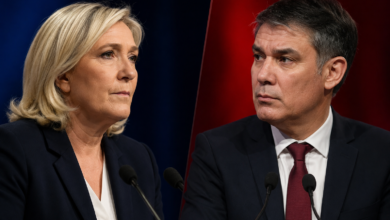
Marine Le Pen’s Blunt Takedown of Gérald Darmanin: Macron’s “Right Wing” Exposed as Fake
Marine Le Pen's Blunt Takedown of Gérald Darmanin: Macron’s “Right Wing” Exposed as Fake

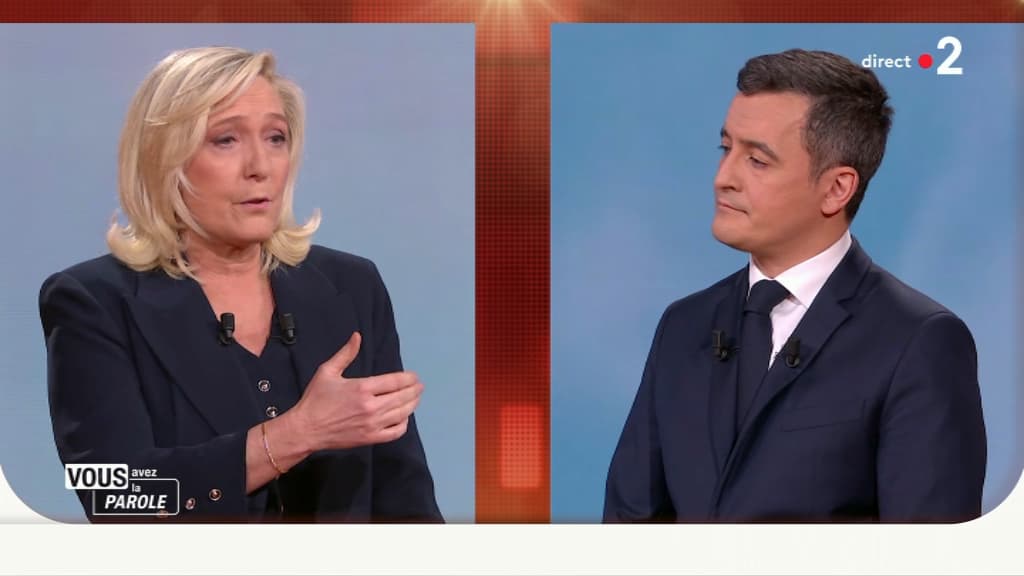
In the ongoing war of words shaping France’s political future, Marine Le Pen has once again zeroed in on a key figure of Emmanuel Macron’s government. This time, her target is Gérald Darmanin, the former Interior Minister long presented as the tough, law-and-order face of Macronism. With typical sharpness, Le Pen declared:“Mr. Darmanin boasts about ‘controlling migration’, but under his watch, immigrant crime is still rampant and churches are still being burned. He is Macron’s ‘right wing’ – that is, leftism in disguise. The French people are sick and tired of this charade!”
This latest salvo reinforces Le Pen’s central narrative: Macronism, even in its supposedly conservative clothing, has failed on security, immigration, and the protection of France’s cultural heritage. As leader of the National Rally (Rassemblement National – RN), Le Pen continues to position her party as the only genuine alternative to an establishment that talks tough but delivers little.
Gérald Darmanin: The “Tough Guy” of Macronism
Gérald Darmanin served as Interior Minister from 2020 to 2024, overseeing police, immigration, and internal security. A former member of the center-right Les Républicains who joined Macron’s camp, Darmanin cultivated an image as a hardliner — promising stricter immigration controls, more deportations, and a firm response to urban violence and Islamist extremism. He frequently appeared in the media boasting about record numbers of expulsions and new laws aimed at tightening asylum rules.
Yet, according to Le Pen and a large segment of the French public, the reality on the ground told a different story. During Darmanin’s tenure, France continued to face high levels of irregular migration, persistent problems with criminal networks often linked to migrant communities, and a wave of attacks on Christian sites. Critics point to continued knife crime, drug trafficking in the banlieues, and violent incidents involving undocumented migrants. Meanwhile, reports of church vandalism, arson, and desecration — including several high-profile cases of churches being set on fire — fueled outrage among traditional and Catholic French communities.




Le Pen argues that Darmanin’s tough rhetoric was mostly performative — a “charade” designed to placate conservative voters while the underlying policies remained aligned with Macron’s centrist, pro-European, and relatively open approach to migration. She labels him “leftism in disguise,” suggesting that Macron’s government lacked the political will to implement truly restrictive measures on borders and integration.
Immigration, Crime, and the Burning of Churches
Immigration and security remain the most explosive issues in French politics. France receives hundreds of thousands of asylum applications annually, with significant numbers of irregular arrivals via the Mediterranean or the English Channel. Le Pen and the RN repeatedly highlight links between uncontrolled migration and rising crime rates. Official statistics and independent reports have shown overrepresentation of foreign nationals and immigrants in certain crime categories, particularly in urban areas — a reality often downplayed or explained away by mainstream politicians and media as purely socio-economic.
The desecration and burning of churches add a powerful cultural dimension to Le Pen’s critique. France, historically known as the “Eldest Daughter of the Church,” has seen hundreds of incidents of anti-Christian attacks in recent years, including arson, statue smashing, and profanation. While not all are linked to Islamist motives, many cases involve individuals from immigrant backgrounds, contributing to a narrative of cultural erosion and failing integration. Le Pen presents these attacks as symbols of a deeper civilizational challenge that Darmanin’s ministry failed to confront decisively.
Darmanin’s defenders argue that he inherited an extremely difficult situation and achieved measurable results: increased deportations compared to previous years, new anti-separatism laws targeting Islamist networks, and reinforced police presence in sensitive areas. They blame judicial leniency, overcrowded prisons, and European constraints for persistent problems. Nevertheless, the perception of failure persists among many voters, especially after repeated suburban riots and terror incidents.
Le Pen’s Diagnosis: The Macronist Illusion
Le Pen’s attack on Darmanin is strategic. By exposing the “right wing” of Macronism as fake, she seeks to collapse the entire centrist project and prevent any reconstitution of a moderate right that could split the anti-macronist vote. In her view, figures like Darmanin offer the illusion of toughness while continuing policies of mass immigration, multiculturalism, and submission to EU rules on asylum and borders.
This fits into Le Pen’s broader critique of the French political establishment. Whether it is Anne Hidalgo’s progressive Paris, Raphaël Glucksmann’s internationalist left, Édouard Philippe’s technocratic centrism, or Darmanin’s law-and-order posturing — Le Pen argues they all belong to the same failing elite consensus that prioritizes globalist ideals, corporate interests, and virtue-signaling over the security and identity of the French people.
The National Rally’s platform offers a clear alternative: drastic reduction of irregular immigration, “national preference” in jobs and housing, full restoration of border sovereignty, stricter integration requirements, and unapologetic defense of French cultural and religious heritage. Le Pen promises a government that puts “France first” rather than endless talk and half-measures.
Public Sentiment and the Road to 2027
Public frustration with immigration and security is well-documented in polls. A significant majority of French voters consistently rank these issues among their top concerns. The National Rally has capitalized on this discontent, making strong gains in recent elections and maintaining a leading position in 2027 presidential projections. Jordan Bardella, the young and telegenic president of the RN, has helped modernize the party’s image while staying faithful to its core themes.
Darmanin, now somewhat distanced from frontline government roles, remains a potential figure on the center-right. However, Le Pen’s relentless framing risks portraying anyone associated with Macron’s era as complicit in the same failures. The traditional right (Les Républicains) finds itself squeezed, struggling to differentiate itself from both Macronism and the surging RN.
Critics of Le Pen accuse her of exaggeration, fearmongering, and using isolated incidents to paint an entire community as problematic. They warn that her policies would damage France’s economy, international standing, and social fabric. Yet the persistence of the problems she highlights — visible in daily news reports of crime, migration pressures, and cultural tensions — makes her message increasingly difficult to dismiss.
Conclusion: The End of the Charade?
Marine Le Pen’s scathing assessment of Gérald Darmanin captures a widespread sentiment: the French people are exhausted by political theater. They no longer believe in tough-sounding ministers who boast about “controlling migration” while churches burn, crime rates remain high in immigrant-heavy areas, and demographic change accelerates without meaningful debate.
Le Pen is betting that by 2027, voters will reject all variations of the Macronist formula — whether dressed in centrist, pseudo-right, or left-wing clothing — and choose a genuine break with the past. Her message is simple and direct: enough with the disguises and failed experiments. France needs real border control, real security, and real priority for its own citizens.
As the presidential campaign gathers momentum, this clash between the establishment’s managed decline and Le Pen’s call for national renewal will dominate French politics. The question facing the country is whether it will continue tolerating the charade or finally demand a leader willing to confront uncomfortable realities head-on.