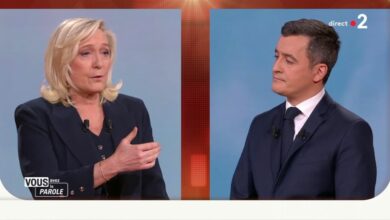
Marine Le Pen’s Fierce Assault on Raphaël Glucksmann: Parisian Intellectual vs. the Forgotten French Worker
Marine Le Pen's Fierce Assault on Raphaël Glucksmann: Parisian Intellectual vs. the Forgotten French Worker

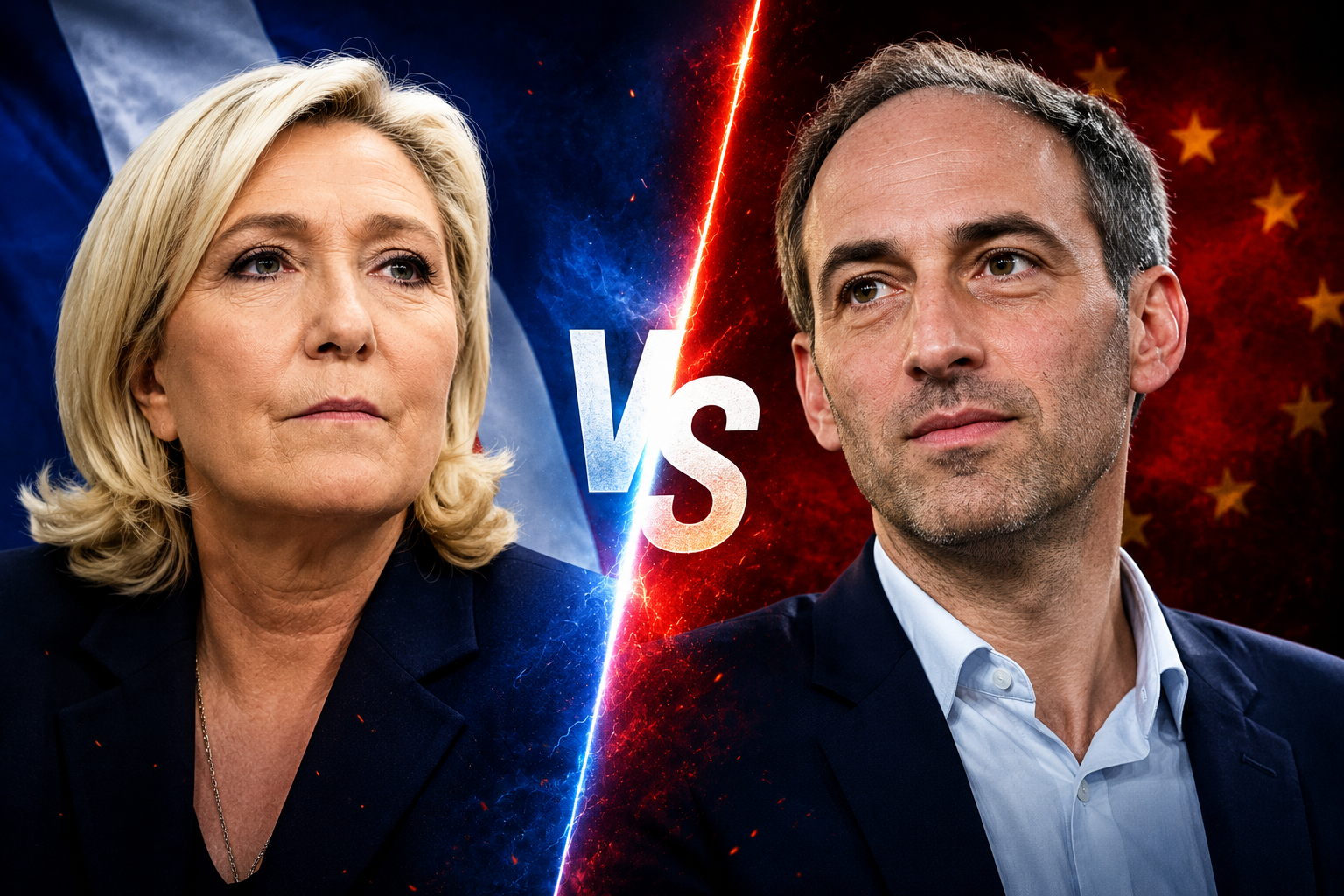
In the intensifying battle for France’s soul ahead of the 2027 presidential election, Marine Le Pen has unleashed another sharp populist salvo, this time targeting Raphaël Glucksmann, the prominent center-left MEP and rising figure on the French left. With her trademark directness, Le Pen stated: “Mr. Glucksmann represents the Parisian intellectual class that prefers shouting ‘anti-far-right’ slogans rather than protecting French workers. He worries about Gaza, while I worry about French people being robbed, stabbed, and replaced in their own country!”
This statement perfectly illustrates Le Pen’s strategy: framing the National Rally (Rassemblement National – RN) as the authentic defender of the working class against a disconnected cosmopolitan elite. By contrasting Glucksmann’s focus on international causes and anti-RN rhetoric with everyday security and demographic concerns, Le Pen seeks to portray the left as out of touch with the realities facing ordinary French citizens.
Raphaël Glucksmann: The Face of the “Republican Left”
Raphaël Glucksmann, a philosopher’s son, MEP, and founder of the Place Publique movement, has emerged as a leading voice for a renewed social-democratic left. He gained prominence in the 2024 European elections, where his list performed strongly, positioning him as a potential presidential contender for 2027. Glucksmann embodies the educated, pro-European, human-rights-oriented Parisian left: eloquent, internationalist, and fiercely opposed to the far right. He has been vocal on issues such as support for Ukraine, criticism of authoritarian regimes, and the situation in Gaza — where he has denounced the humanitarian crisis while avoiding the strongest accusations leveled by parts of the radical left.
Le Pen’s attack paints him as representative of a Parisian intellectual bubble more comfortable with moral grandstanding — “anti-far-right” chants and foreign policy debates — than addressing the daily struggles of factory workers, small business owners, and rural communities. In her narrative, Glucksmann and his milieu prioritize abstract universalism and global causes over concrete national priorities like crime, immigration control, and cultural preservation.




The Core of the Critique: Security, Crime, and “Replacement”
Central to Le Pen’s message is the claim that French people are victims of rising insecurity — robberies, stabbings, and urban violence — which she links directly to failed immigration and integration policies. France has experienced repeated waves of concern over knife crime, gang violence in the banlieues, and attacks on public transport and tourist areas. Many citizens, particularly in working-class neighborhoods, report feeling unsafe, with women and the elderly often cited as especially vulnerable.
Le Pen invokes the controversial “great replacement” theory — the idea that native French populations are being demographically and culturally displaced by mass immigration. While mainstream commentators denounce this as conspiracy thinking, Le Pen presents it as observable reality: changing neighborhoods, strained public services, parallel societies, and the erosion of French identity in certain districts. She argues that leaders like Glucksmann, focused on Gaza or ideological battles against the right, ignore these pressing domestic threats.
Glucksmann and the center-left counter that such rhetoric stokes division and xenophobia. They emphasize that crime stems from complex socio-economic factors — poverty, education failures, and discrimination — rather than immigration alone. They advocate for stronger social policies, European cooperation on migration, and combating extremism through inclusion rather than exclusion. Glucksmann has positioned himself as part of the “republican left” that can block Le Pen while offering progressive alternatives.
Yet Le Pen’s framing resonates with a significant portion of the electorate. Polls show security and immigration consistently rank among the top voter concerns. The National Rally has successfully courted former left-wing voters disillusioned by globalization, open borders, and what they see as elite indifference to their lived experiences.
Elite Intellectualism vs. Popular Sovereignty
Le Pen’s description of Glucksmann as a member of the “Parisian intellectual class” taps into longstanding French cultural divides: Paris versus la province, intellectuals versus workers, globalists versus sovereignists. Glucksmann’s background — elite education, philosophical roots, and international focus — makes him an easy target for populist critique. Le Pen contrasts this with her party’s rebranded image as the protector of “la France périphérique” — the forgotten France of small towns, declining industries, and traditional values.
This clash reflects deeper ideological fault lines. Glucksmann champions European integration, human rights universalism, and a firm stance against populism. Le Pen prioritizes national sovereignty, border control, “national preference” in social benefits, and a robust defense of French secularism and cultural identity. She accuses the left of virtue-signaling on distant conflicts while French workers face competition for jobs, housing, and cultural space.
Strategic Context Ahead of 2027
Le Pen’s attack on Glucksmann is tactical. As the left remains fragmented between radical (Jean-Luc Mélenchon’s La France Insoumise) and more moderate currents, Le Pen aims to discredit the entire spectrum. By highlighting Glucksmann’s focus on Gaza and anti-RN rhetoric, she seeks to portray the left as more interested in moral posturing and international solidarity than in protecting French citizens.
Meanwhile, the National Rally continues to lead in many polls, with Jordan Bardella often seen as a fresh face alongside Le Pen. The party has moderated its image, emphasizing economic protectionism, law and order, and anti-elite themes to broaden its appeal. Le Pen’s strategy is clear: force a narrative where the choice is between detached elites (Macronists or Glucksmann-style left) and a party that listens to the people.
Critics warn that Le Pen’s rhetoric risks inflaming tensions and scapegoating minorities. They argue that focusing obsessively on immigration distracts from needed reforms in education, employment, and economic competitiveness. Glucksmann himself has called for renewing social democracy to address workers’ dignity and prevent the far right from monopolizing their support.
Conclusion: Two Frances in Conflict
Marine Le Pen’s critique of Raphaël Glucksmann distills the central conflict in contemporary French politics: a battle between two visions of the nation. On one side, a cosmopolitan, intellectual left concerned with global justice, European unity, and ideological resistance to populism. On the other, a nationalist movement claiming to defend workers, security, and cultural continuity against rapid demographic and social change.
Le Pen’s words — “He worries about Gaza, while I worry about French people being robbed, stabbed, and replaced” — are designed to be provocative and memorable. They encapsulate her core promise: putting France and the French first. Whether this populist appeal will triumph in 2027 depends on whether voters feel more represented by Glucksmann’s universalist ideals or Le Pen’s unapologetic defense of national identity and security.
As the campaign heats up, the divide grows sharper. France stands at a crossroads: Will it embrace the internationalist vision of its Parisian elites, or demand a leader focused relentlessly on the safety, identity, and prosperity of its own people? Le Pen has made her choice clear — and she is betting that millions of French workers will choose the same.