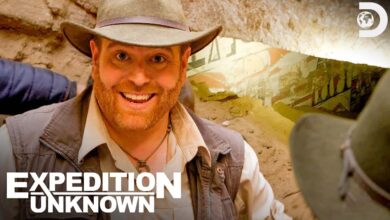
TERRIFYING Discovery At The Tunnels Of Alcatraz | Expedition Unknown
TERRIFYING Discovery At The Tunnels Of Alcatraz | Expedition Unknown


The Alcatraz Escape: An Epic Tale of Bravery and Cunning
Alcatraz Island, once home to America’s most notorious criminals, has become a symbol of mystery and intrigue. Situated in the cold, rough waters of San Francisco Bay, the island’s high-security federal penitentiary operated from 1934 to 1963, housing some of the most dangerous criminals in history. Its isolation, combined with fierce tides and icy waters, made it seem like an impenetrable fortress. The belief that escaping from Alcatraz was nearly impossible was deeply ingrained, but one legendary escape in 1962 would challenge that myth.
The Notorious 1962 Escape
Alcatraz’s security was legendary. The bay surrounding the island, with temperatures around a bone-chilling 53°F and strong currents, was thought to be a natural barrier that no one could overcome. The guards were highly trained, and strict security measures ensured that no prisoner could get far without being caught. Over the years, stories of sharks, expert marksmen, and treacherous waters were circulated, building an almost mythical aura around the prison’s supposed impenetrability.
Yet, in 1962, three inmates managed to do the unthinkable. Frank Morris, along with brothers John and Clarence Anglin, masterminded a daring escape plan. These men weren’t just criminals—they were intelligent, resourceful, and determined. They meticulously planned their escape for months, using their creativity and teamwork to overcome seemingly insurmountable obstacles.




The Plan: A Creative and Daring Escape
The escape started with Frank Morris, whose high IQ (133) made him the perfect leader for the escape. Along with the Anglin brothers, they began digging their way out. Using rudimentary tools like spoons, they painstakingly chipped away at the walls of their cells. Their goal was to reach the ventilation ducts that connected their cells to the outside.
To avoid detection, the inmates used clever tricks, including placing fake heads in their beds during nightly headcounts. These heads, made from paper-mâché and other materials, were eerily realistic, fooling the guards into thinking the prisoners were asleep. While the guards made their rounds, the trio continued their secret work—cutting through walls, constructing makeshift rafts, and gathering supplies.
They collected over 50 raincoats, which they cut and stitched together to create a raft and life jackets. These materials, seemingly simple, would be the key to their survival in the icy waters of the bay. The escape plan was audacious and dangerous, but their determination was unwavering.
The Escape: The Night of June 11, 1962
On the night of June 11, 1962, the prisoners were ready. They crawled through the holes they’d made in their cells’ walls, navigating the labyrinth of tunnels and ventilation ducts. They climbed up to the roof, where they used a modified tool to inflate their rubber raft.
The escapees then made their way down the side of the prison, heading toward the water. Their fate remained uncertain—did they survive the treacherous swim across the bay, or did they perish in the cold, unforgiving waters?
At 7:00 AM the next morning, the prison’s wake-up bell rang, and a headcount began. Guards soon realized that the prisoners were missing, but despite extensive searches and investigations, no trace of the men was ever found. The FBI spent 15 years investigating the case, but they could never confirm the escapees’ fate. In 1979, the case was closed, with the conclusion that the men had likely drowned in the bay.
Josh Gates Investigates the Mystery
Josh Gates, intrigued by this daring escape, embarked on a journey to uncover the truth behind the infamous prison break. During a tour of Alcatraz, he walked through the very halls where the escapees had plotted their escape. The site of Frank Morris’s cell left him awestruck, and he marveled at the ingenuity and bravery that these men displayed. Gates explored the maze-like hallways, discovering hidden tunnels and the secret workshop where the prisoners built their raft and life jackets.
As Gates learned more about the escape, he was amazed by the prisoners’ resourcefulness. They had turned everyday items—tools from the prison’s workshop, old magazines, and even vacuum cleaner motors—into life-saving devices. The prisoners had used their knowledge to overcome the odds, showing that, even in the most extreme conditions, the desire for freedom could inspire incredible creativity.
One of the most startling discoveries was the fake heads used to trick the guards. The fact that they had created four heads—when only three prisoners escaped—suggested that the original plan had included another participant who had encountered problems during the escape.
The Legacy of the Escape
As Gates concluded his tour, he reflected on the impact of this escape on the legacy of Alcatraz. The escape showed that even the most secure prison wasn’t invulnerable. It also demonstrated the strength of the human spirit—how even in the face of overwhelming odds, individuals could use their intelligence and resourcefulness to achieve the impossible.
But the mystery remains. What happened to Frank Morris and the Anglin brothers after they disappeared into the night? Did they make it across the bay? Or did they fall victim to the dangerous waters surrounding Alcatraz? Their fate is still unknown, and this unresolved question has fueled speculation for decades.
Josh Gates, after retracing the prisoners’ steps, can’t help but feel that their escape—and their disappearance—would make a perfect epic movie. It’s a story of courage, cunning, and the unyielding human desire for freedom. And even today, the story of Alcatraz’s most daring escape remains one of the greatest unsolved mysteries in American criminal history.