Tracking the Last Tasmanian Tiger! | Expedition Unknow
Tracking the Last Tasmanian Tiger! | Expedition Unknow
 DL
DL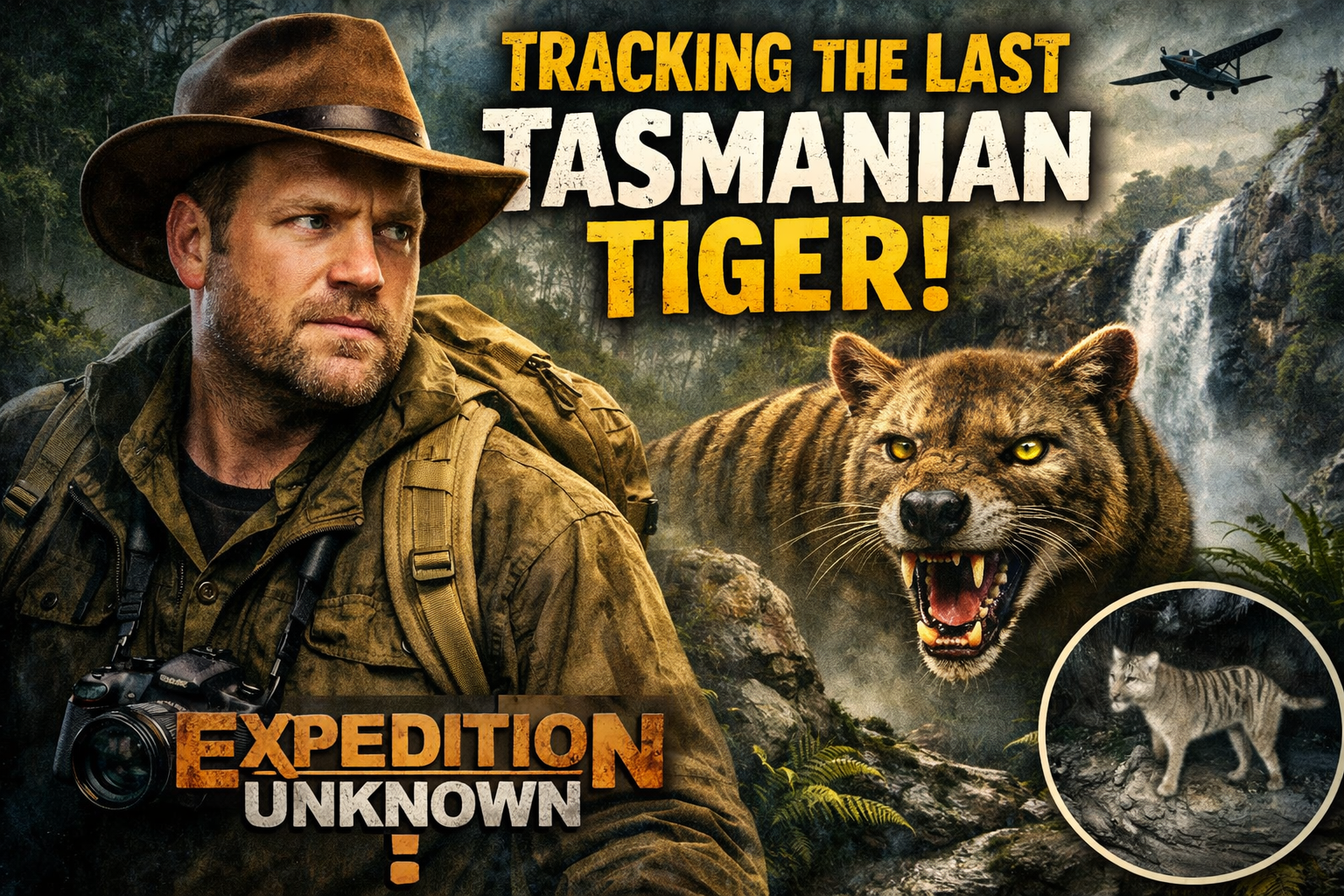
The Legend That Refuses to Die
Few creatures have captured the human imagination quite like the elusive Tasmanian tiger, scientifically known as the thylacine. Officially declared extinct in 1936, this striped marsupial predator has since become one of the world’s most famous “lost animals.” Yet, decades later, sightings persist, fueling expeditions, scientific debates, and global fascination. In an unforgettable episode of Expedition Unknown, explorer Josh Gates embarks on a journey to uncover whether the Tasmanian tiger might still roam the wild.
A Glimpse Into the Past
The thylacine once inhabited mainland Australia, Tasmania, and New Guinea. With its dog-like body, kangaroo-like tail, and distinctive tiger-like stripes, it was a unique predator that stood apart from any other species. Early European settlers in Tasmania blamed the animal for killing livestock, leading to government-sponsored bounty programs that drastically reduced its population.
The final confirmed thylacine, later nicknamed “Benjamin,” died in captivity at the Hobart Zoo in 1936. That moment marked the official extinction of the species—but not the end of its story.
The Mystery of Modern Sightings
Despite its extinction status, reported sightings of the Tasmanian tiger have continued for decades. From farmers in Tasmania to hikers in remote Australian forests, witnesses claim to have seen a striped, wolf-like animal moving silently through the wilderness.



In Expedition Unknown, Josh Gates interviews locals who describe eerily consistent details: a stiff tail, unusual gait, and unmistakable stripes across the back. Some even report hearing strange, barking calls that differ from any known animal in the region.
These accounts raise a compelling question: Could a small population of thylacines have survived undetected?
Into the Wild: The Expedition Begins
To investigate, the Expedition Unknown team ventures deep into Tasmania’s dense and rugged wilderness. The terrain itself presents a major challenge—thick forests, remote valleys, and limited human access make it an ideal hiding place for a species thought to be extinct.
Armed with motion-sensor cameras, night-vision equipment, and audio recording devices, the team sets up a network designed to capture any evidence of elusive wildlife. They also consult wildlife experts and historians to identify areas where thylacines were last reported.
One particularly intriguing hotspot is the Tarkine rainforest, one of the largest temperate rainforests in the world. Its isolation and biodiversity make it a prime candidate for harboring undiscovered or surviving species.
Science vs. Hope
The scientific community remains skeptical about the survival of the Tasmanian tiger. Most experts argue that a breeding population would need sufficient genetic diversity and food resources—conditions difficult to maintain without detection for nearly a century.
However, history offers surprising counterexamples. Species like the coelacanth and the takahe were once thought extinct, only to be rediscovered decades later. These “Lazarus species” keep hope alive for believers in the thylacine’s survival.
In the episode, researchers analyze environmental DNA (eDNA) samples collected from water and soil. This cutting-edge method can detect traces of animal DNA left behind in the environment. While results are inconclusive, they highlight the growing role of technology in solving wildlife mysteries.
A Cultural Icon
Beyond science, the Tasmanian tiger has become a powerful cultural symbol. It represents both the consequences of human-driven extinction and the enduring hope for rediscovery. In Tasmania, the thylacine appears on logos, artwork, and conservation campaigns, reminding people of what was lost—and what might still be found.
Cryptozoologists, enthusiasts who study hidden or unknown animals, consider the thylacine one of their most compelling cases. Online communities and documentaries continue to share alleged footage and photographs, keeping the legend alive in the digital age.
The Final Verdict
After days of exploration and data collection, the Expedition Unknown team does not find definitive proof of the Tasmanian tiger’s survival. No clear images, no confirmed tracks—only tantalizing hints and unanswered questions.
Yet, the absence of evidence is not necessarily evidence of absence. The vast wilderness of Tasmania still holds secrets, and as long as sightings continue, the possibility remains—however slim—that the thylacine endures.
Why the Search Matters
The quest to find the Tasmanian tiger is about more than one species. It reflects humanity’s relationship with nature—our capacity to destroy, but also our desire to rediscover and protect.
If the thylacine were found alive, it would be one of the greatest zoological discoveries of all time. But even if it remains extinct, the search inspires conservation efforts aimed at protecting endangered species before they vanish forever.
Conclusion
Tracking the Last Tasmanian Tiger is more than an expedition—it is a journey into mystery, science, and hope. Through the lens of Expedition Unknown, viewers are reminded that the natural world still holds secrets waiting to be uncovered.
Whether the Tasmanian tiger is truly gone or silently surviving in the shadows, one thing is certain: its story continues to captivate the world, urging us to look closer, explore deeper, and never stop asking questions.
DL