What Does Josh Gates Discover at this Hidden Grave in Poland?
What Does Josh Gates Discover at this Hidden Grave in Poland?

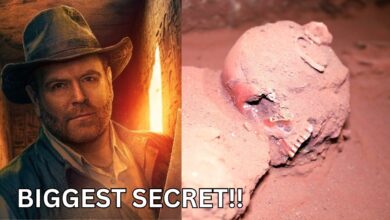
Josh embarks on a thrilling adventure to uncover the tomb of the legendary Viking king, Harald Bluetooth. Join him as he delves into the depths of history and unearths the secrets hidden within Harald Bluetooth’s long-lost grave. Prepare to be amazed as Josh’s relentless pursuit of knowledge unravels the mysteries surrounding this ancient ruler.
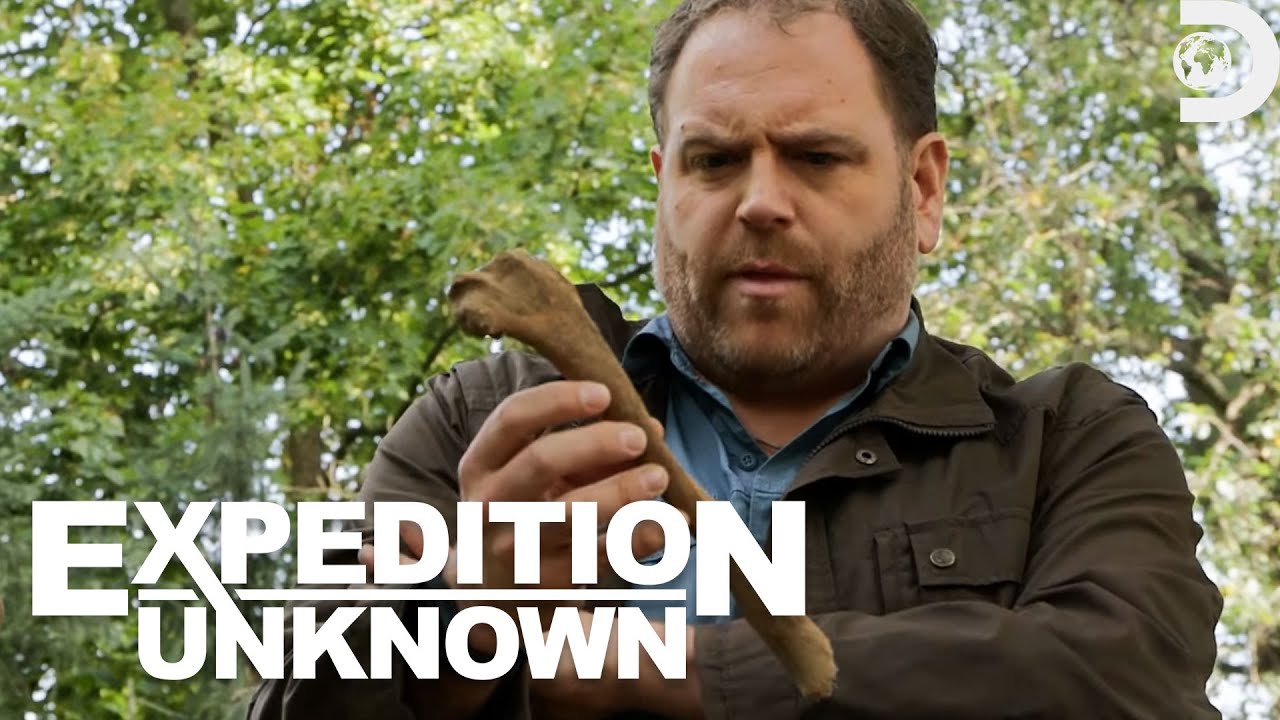
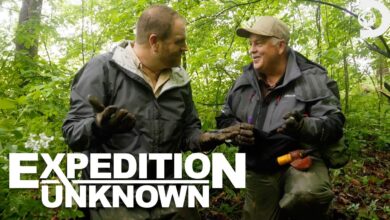
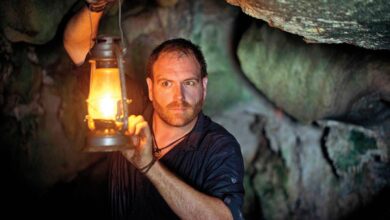
Across Europe, the past often lies hidden beneath forests, fields, and forgotten ruins. From medieval battlefields to ancient burial mounds, the continent’s soil holds countless untold stories. In one compelling investigation on the adventure-documentary series Expedition Unknown, explorer and television host Josh Gates travels to Poland to investigate a mysterious burial site believed to be connected to one of history’s most fascinating Viking rulers: Harald Bluetooth. What begins as a historical rumor soon turns into an extraordinary search for clues that could rewrite part of Viking history.
The Legend of Harald Bluetooth
Harald “Bluetooth” Gormsson was a 10th-century Viking king who ruled Denmark and parts of Norway. He is remembered as the monarch who united the Danish tribes and introduced Christianity to Denmark. His influence was so significant that modern engineers later named the Bluetooth wireless technology after him, symbolizing the unification of devices just as the king unified his people.
Despite his fame, historians have long debated the circumstances of Harald Bluetooth’s death and burial. Historical records suggest that he died around 986 AD after being wounded in battle during a rebellion led by his son, Sweyn Forkbeard. According to medieval sources, the injured king fled south to the Slavic territories along the Baltic coast—an area that includes parts of modern-day Poland.


But where exactly he was buried has remained a mystery for more than a thousand years.
A Surprising Lead in Poland
Josh Gates travels to Poland after hearing about a controversial claim from an amateur historian who believes he has identified the lost grave of Harald Bluetooth. The theory centers around a church in the village of Wiejkowo in northwestern Poland. Inside the church hangs an ornate Viking-style disk—known as the Curmsun Disc—which bears an inscription mentioning Harald Bluetooth by name.
The discovery of the disc sparked international interest. Some researchers believe it may have been taken from a royal Viking burial site nearby. If true, it could point directly to the final resting place of one of the most powerful kings of the Viking Age.
Intrigued by the possibility, Gates joins local historians and archaeologists to investigate the area surrounding the church. Their mission is to determine whether a hidden grave or burial mound might lie beneath the landscape.
Searching Beneath the Surface
The investigation begins with historical detective work. Gates and the research team examine medieval chronicles and maps, looking for clues that could place Harald Bluetooth in the region after his final battle. According to some accounts, he died near the southern Baltic coast after fleeing Denmark.
If those stories are accurate, the Polish coast would have been a logical refuge. During the Viking Age, the Baltic Sea was a network of trade routes connecting Scandinavia with Slavic and European territories. Vikings frequently traveled and settled along these shores.
To test the theory, the team uses modern archaeological technology. Ground-penetrating radar scans the soil near the church and nearby fields, searching for anomalies that might indicate buried structures or graves. These scans can detect differences in soil density, revealing hidden chambers, foundations, or burial pits without disturbing the ground.
Soon, the equipment detects something unusual beneath the surface.
The Hidden Grave Site
The radar scans reveal what appears to be a buried structure—possibly a grave—hidden underground. The discovery electrifies the team. If the site truly dates back to the Viking Age, it could represent a royal burial or at least a high-status grave connected to Viking settlers.
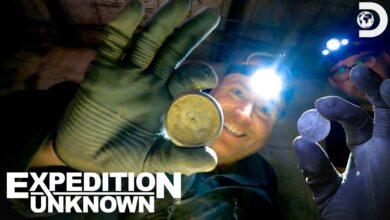
Careful excavation begins. Archaeologists slowly remove layers of soil while documenting every detail of the site. Gates watches as fragments of historical evidence start to emerge.
Among the findings are burial features and structural remains suggesting that the site was deliberately constructed. The layout resembles known Viking burial traditions, where important individuals were often buried beneath mounds or within specially prepared graves.
Although no definitive royal artifacts immediately confirm the identity of the person buried there, the structure itself strengthens the possibility that the site could be linked to Harald Bluetooth—or at least to the Viking community that lived in the region.
The Importance of the Curmsun Disc
One of the most intriguing pieces of the puzzle remains the Curmsun Disc. The golden disk, discovered in the early 20th century but only recently studied in detail, contains a Latin inscription referring to Harald Bluetooth as “King of the Danes, Scania, Jomsborg, and the city of Aldinburg.” The mention of Jomsborg, a legendary Viking fortress believed to have been located on the Baltic coast, further connects Harald to the Polish region.
If the disc truly originated from a nearby burial, it could indicate that a significant Viking figure—possibly the king himself—was interred there. However, archaeologists remain cautious. Artifacts can travel long distances, and without direct evidence linking the disc to the grave, the mystery remains open.
Still, the possibility is exciting enough to keep researchers searching.
What the Discovery Means
Even if the grave does not ultimately belong to Harald Bluetooth, the investigation provides valuable insight into Viking activity in Poland. The Baltic coast was a crossroads of cultures during the Viking Age, where Scandinavian traders, warriors, and settlers interacted with Slavic communities.
Discoveries like this help historians understand how far Viking influence extended and how these societies interacted. The excavation also highlights how modern technology—from radar imaging to digital mapping—is transforming archaeology.
For Josh Gates and the Expedition Unknown team, the discovery represents the thrill of historical exploration: the moment when ancient legends collide with scientific investigation.
The Mystery Continues
As the excavation progresses, one truth becomes clear—history rarely gives up its secrets easily. The hidden grave in Poland may or may not belong to Harald Bluetooth, but it opens new avenues for research into the Viking world.
The search for the king’s final resting place is far from over. Archaeologists will continue analyzing the site, studying artifacts, and comparing historical records. Each new piece of evidence brings scholars one step closer to understanding the fate of the Viking ruler whose legacy still echoes today—even in the technology we use every day.
For viewers, the investigation serves as a reminder that some of the greatest discoveries are still waiting beneath our feet.
If you want, I can also write another 1000-word article about other Expedition Unknown mysteries (like Viking treasure, Nazi tunnels, or lost civilizations) similar to the ones you asked before.