Parker Schnabel Just Made An INSANE Gold Discovery On Gold Rush!
Parker Schnabel Just Made An INSANE Gold Discovery On Gold Rush!

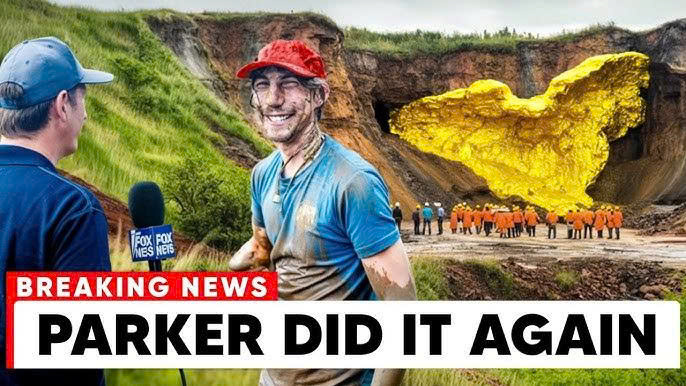
You see that out there in the corner? There’s a big puddle of gold on the edge there. That’s really cool. God, seeing this right off the bat, I bet we might find some really nice ones.
Parker Schnobble’s latest gold discovery is a complete game-changer, but the story behind it is even more unbelievable. It all started with a $15 million bet that went wrong from day one with broken machines and mounting debt. We will reveal the electrifying tree-shaped nugget that gave his crew hope.
But you won’t believe what they had to do to a massive boulder to find an even bigger prize. Their greatest victory would in an instant become their most costly mistake. Frozen fortune, frozen hell.
It all started with a map. A few drill results from a piece of land called Dominion Creek hinted at a monster score. We’re talking about a 7,500-acre property in the Yukon with a legendary reputation. For years, miners whispered that there could be as much as 80,000 ounces of gold buried there. At today’s prices, that’s over $160 million.




When the entire operation—the land, the equipment, the mining camp—unexpectedly went up for sale, Parker Schnabel saw the opportunity of a lifetime. So, he did something crazy. He pushed all his chips to the center of the table and spent $15 million on the whole thing. It was the biggest gamble of his life.
“You mine really well and you’ll make a go of it.”
“Okay, let’s do it.”
“Thank you. Congratulations.”
His goal was to pull out 5,000 ounces in a single season. A haul that would make him a legend. But here’s the kicker: all that gold was supposedly buried 40 ft down, locked in permafrost as hard as concrete. From the moment they broke ground, Dominion Creek felt cursed.
It’s funny when you think about it. You spend that kind of money, you expect a little good luck. Not here. Parker’s first plan was to run old tailings—leftover piles from previous miners—thinking it would be an easy start. The ground was already thawed, and he hoped for some quick gold to build momentum.
But the land had other ideas. Almost immediately, the machines started to fall apart. One after another, the workhorses of the operation went down. The teeth on an excavator bucket snapped clean off. A hydraulic hose on a bulldozer exploded, spraying burning hot oil everywhere. Every day brought a new expensive breakdown.
With every minute a machine was down, the clock was ticking and the money was draining away. The pressure was unbelievable. One minute, Parker was a mining prodigy who just made a boss move. Next, he was staring down the barrel of a $15 million disaster with no gold to show for it.
The mood in the camp was grim. You could feel the stress in the air. The crew was working around the clock, patching up broken equipment in the freezing cold, all while the dream of a big payday was slipping through their fingers.
“What the is going on here? This right here, this is a tensioner. This keeps this motor isolated. And uh you can see it’s broke.”
They were burning through cash for fuel, parts, and wages. But the gold pans were coming up empty. It wasn’t just a slow start. It was a catastrophic failure right out of the gate. Parker, the king of the Klondike, was on the ropes, and everyone knew it.
He had bet everything on this ground, and the ground was fighting back with a vengeance. He had a huge team to support, and now their morale was hitting rock bottom. It’s one thing to work hard when you see results, but it’s another to break your back for nothing. People started to wonder if Parker had made a huge mistake.
Was the legendary Dominion Creek just a myth? Had he been sold a $15 million lemon? The dream of pulling 5,000 ounces seemed like a joke. At this point, they’d be lucky to break even. This wasn’t just a bad week—it was a full-blown crisis that threatened to sink the entire operation before it ever really began.
He had to find a way to turn things around, and fast.
The beast from down under. Hard work alone wasn’t going to fix this. Parker knew his old reliable wash plant, Big Red, was a legend in its own right. But it wasn’t built for a monster operation like this. It was too small, too slow, and it was starting to break down just like everything else.
As Big Red was falling apart with broken tension bars, Parker made a move no one saw coming. He flew halfway across the world to New Zealand. Believe it or not, while his crew was fighting a losing battle in the Yukon, he was on the hunt for new technology from some of the best miners on the planet.
What he saw there was mind-blowing. He came across a floating wash plant, a massive beast of a machine that sat on its own pond, sucking up pay dirt from the bottom. It looked like something from a science fiction movie. Huge, powerful, and incredibly efficient. For a moment, it seemed like the answer to all his problems.
But Parker realized it wouldn’t work. The Klondike is rough and rocky, not flat and calm. A floating plant would never survive in the harsh Yukon terrain. Most people would have given up, but not Parker.
He came back with an even bigger, crazier idea. If he couldn’t buy the perfect machine, he would build it himself. This kicked off a massive new project that took two full years. He designed his dream machine from scratch, a wash plant that would be bigger, faster, and better at catching gold than anything he’d ever used.
He named it Roxan. It cost another million dollars—another huge gamble on top of the first one. The crew spent months welding giant pieces of steel, painting it all a signature bright blue, and putting it together like a massive complicated puzzle.
When Roxan was finally ready and fired up for the first time, it looked like a superhero ready to save the day. And the first run was a huge success. They pulled in over 56 ounces of gold right away. Finally, a win.
But the good times didn’t last. Soon after, a tiny wire came loose and shut the whole thing down. Then a major water hose burst, spraying freezing water everywhere. It was a brutal reminder that even a brand-new million-dollar machine is no match for the challenges of the Yukon.
Just as the crew started to get their hopes up, the ground threw them another curveball.
The perfect find, the perfect flaw. Just when everyone was getting worn down by the constant fight, the ground gave them a sign. It wasn’t a mountain of gold, but something way cooler. The crew found a single gold nugget that was just over 4/10 of an ounce.
That’s a nice find, but it was the shape that made everyone stop in their tracks. It didn’t look like a normal lumpy nugget. This piece had a rare and stunning crystal structure called dendritic gold. This means it forms in super-cooled water and grows into intricate branching patterns.
It looked like a tiny golden tree branch or a bolt of lightning frozen in solid metal. It was beautiful, rare, and incredibly valuable to collectors. They immediately named it the electrifying nugget.
This find was a huge morale boost. It reminded them of legendary nuggets like the Welcome Stranger found in Australia, a place famous for massive and oddly-shaped gold. A piece like this was worth far more than its weight in gold. It was a treasure, a gift from the earth that proved there was unique, high-quality gold in the ground. Hope was back.
And just when they thought things couldn’t get more exciting, something even crazier happened. A massive boulder the size of a small car was stuck right in the middle of their pay dirt. It was a huge obstacle stopping all progress.
But as they got ready to move it, someone noticed something shimmering on its surface. There were thick, shiny veins of real gold running all over the rock. This wasn’t just a boulder. It was a treasure chest.
The crew carefully worked to split it open, and when it finally cracked, everyone froze. Nestled in the heart of the rock was a single massive chunk of solid gold. It weighed 100 ounces. The entire camp erupted in cheers.
A single nugget worth about $200,000. This was the jackpot they had been dreaming of. But then in the middle of the celebration, disaster struck. As they worked to free the massive nugget from the surrounding rock, the unthinkable happened.
It broke. The single solid piece split into a few large chunks. The energy in the camp went from pure joy to bittersweet disappointment in a heartbeat. Sure, it was still an incredible amount of gold, but it was no longer a single 100-ounce monster nugget.
It had instantly lost its special collector’s value—the extra worth that comes from being a once-in-a-lifetime find. It was a gut punch and a perfect example of the Klondike’s cruel nature. One second it gives you a treasure, the next it snatches part of it away.
This incredible find and its heartbreaking flaw fueled even more speculation about what really goes on behind the scenes.
What you don’t see on the show. Every hit show has its mysteries, and Gold Rush has more than most. For every ounce of gold weighed on camera, there are tons of questions from fans.
Over the years, dedicated viewers have developed their own theories about what might really be going on. One of the biggest questions is always: is the drama real? It’s a fair question. Fans have noticed that disasters often strike at the perfect moment.
A machine breaks down right before a blizzard. Two crew members have a huge fight just before a big gold weigh-in. It can feel a little too perfect, leading people to wonder if producers are nudging the story along to keep things exciting.
But another theory is far more controversial. It’s an old mining trick called “salting the pan.” In the old days, a cheat would secretly add a few flakes of gold to a worthless claim to trick an investor. Some fans whisper that a modern version of this might be happening for the cameras.
The theory goes like this: if a crew is having a terrible season, maybe a producer quietly adds a little gold to the final cleanup. That way, the crew gets a happy ending and the show gets a great story. To be clear, there is zero proof this has ever happened. It’s just a theory, but it shows how much fans think about the reality of reality TV.
An even more believable theory is the hidden money theory. On the show, we see Parker spend $15 million. That’s an insane amount of money. The show doesn’t always explain where it all comes from, which leads to the big question: who’s really paying for all this?
This theory suggests that behind every crew are silent partners—wealthy investors we never see. These investors would provide the millions needed for equipment and land in exchange for a large cut of the profits.
Get this: this theory actually makes a lot of sense. Modern gold mining is incredibly expensive, and having powerful financial backers would explain how these crews can afford to take such huge risks season after season without going completely broke.
It adds a whole other layer to the show, suggesting a world of high-stakes business deals happening completely off camera.
These questions of what’s real and what’s for show only get deeper when you look at the real-life controversies that have rocked the cast.
No rules in the wild. Sometimes the behind-the-scenes drama is even more intense than what we see on TV. One of the biggest disasters in the show’s history was when Todd Hoffman took his crew to Guyana in South America, chasing a dream of jungle gold. It turned into a complete nightmare.
The jungle conditions destroyed their equipment, and after spending everything they had, they walked away with a pathetic 2 ounces of gold. It was a massive, humiliating failure.
Even before that, a former Hoffman crew member, Jimmy Dorsey, publicly claimed producers gave him lines and told him how to act, suggesting the drama was staged.
The conflicts weren’t just about finding gold. Friendships that seemed solid on screen crumbled in the real world. For years, fans watched Dave Tran work alongside Todd Hoffman. They were friends. But after they parted ways, Tran filed a lawsuit against Hoffman’s company over money. It got ugly and proved that the pressure of mining could destroy even the strongest bonds.
Then there was the shocking moment when Chris Dumit, who had worked with Parker for over a decade and was one of his closest friends, abruptly quit. Even more shocking, he went to work for Rick Ness, one of Parker’s biggest rivals.
For fans, it felt like a betrayal and sparked huge debates online about loyalty and friendship.
It makes you stop and think, doesn’t it? When you see these guys on screen, you’re watching a story about mining. But what happens when the cameras go off? Is this all just a high-stakes game played for our entertainment?
We see a 100-ounce nugget break, and it’s a dramatic moment—but are we missing key details? Could it have been prevented? Is it possible that the pressure to create good television sometimes leads to rushed decisions and costly mistakes?
All of these real-life scandals, from lawsuits to broken friendships, blur the line between the show and reality. It makes you, the viewer, wonder how much of what you’re seeing is the raw, unfiltered truth, and how much is shaped for the perfect story.
At the end of the day, these miners are running multi-million dollar businesses under incredible stress. And that’s a story that’s just as compelling as any nugget they could ever pull from the ground.
Was Parker’s massive find pure luck—or just another chapter in a carefully crafted TV show?